

Informacje o artykule
DOI: https://www.doi.org/10.15219/em113.1740
W wersji drukowanej czasopisma artykuł znajduje się na s. 33-43.
 Pobierz artykuł w wersji PDF
 Abstract in English
Jak cytować
Nozari, H., Rahmaty, M., Szmelter-Jarosz, A. (2026). Examining the cause-and-effect relationships of the practical factors in empowering smart education in the age of digital technologies. e-mentor, 1(113), 33-43. https://www.doi.org/10.15219/em113.1740
Copyright © 2026, Hamed Nozari, Maryam Rahmaty, Agnieszka Szmelter-Jarosz


E-mentor nr 1 (113) / 2026
Spis treści artykułu
- Abstract
- Introduction
- Literature Review
- Research Method
- Research Findings
- Discussion and Implications
- Conclusion
- References
Informacje o autorze
Examining the Cause-and-Effect Relationships of the Practical Factors in Empowering Smart Education in the Age of Digital Technologies
Hamed Nozari, Maryam Rahmaty, Agnieszka Szmelter-Jarosz
Abstract
This study investigates the key factors influencing the empowerment of smart education in the age of digital technologies. The rapid digital transformation of education, accelerated by the COVID-19 pandemic, has highlighted the need to understand the critical drivers of effective smart learning environments. Based on a comprehensive literature review, twenty potential factors were initially identified and subsequently refined through expert evaluation. Fifteen experts in education and digital education policy were invited to assess the factors using a five-point Likert scale; 13 valid responses were received, which were used to identify the final set of nine key enabling factors. The causal relationships among these factors were analysed using the fuzzy DEMATEL method. The results indicate that technical skills of teachers and students, technological infrastructure, and the creation of attractive digital learning content are the most influential drivers of smart education empowerment. These factors significantly influence other components of the smart education ecosystem, including communication practices, monitoring systems, and digital security awareness. The study contributes to the literature by providing a causal framework for understanding the interrelationships among technological, pedagogical, organisational, and social factors in smart education systems.
Keywords: empowerment, online education, smart education, digital transformation, digital education
Introduction
Technologies and teaching methods, especially in developing countries, are often outdated. There is an apparent resistance to change and innovation in the educational process. Although students are primarily oriented toward and eager to use modern communication tools, research shows that their use of modern technologies for educational purposes is limited, even among students. On the other hand, there is evidence that new methodological approaches to teaching in schools, based on current information technologies, can contribute to better vertical integration of the entire educational process, which, in addition to education, also includes the labour market. Smart education is a new approach to the operation of education and learning for students in the new era. It is an essential consequence of the development of information and communication technology. All the elements involved in the teaching and learning process that produce the desired output significantly affect educational outcomes. However, creating an effective e-learning environment requires many factors, including technological, school, and community readiness. The introduction of transformative technologies has caused schools to reconsider their traditional roles and create new organisational structures. This structural change resulted in the creation of a new educational system model titled electronic and intelligent education. This method of education is considered an essential tool in the digital age. It has created a learner-centred learning environment, introduced flexibility in learning methods, and brought about changes in the teaching and learning process in the educational system of schools.
Modern education has been transformed by the integration of the Internet and web-based technologies, including the Internet of Things, artificial intelligence, and blockchain, into students’ learning experiences. As a result, the quality of online and smart education depends on several interrelated inputs, including teachers, students, technological tools, instructional design, financial resources, and educational policy. The design of effective digital learning environments therefore requires not only appropriate technologies but also well-prepared stakeholders and institutional support (Cui, 2023). In addition, parent-school interaction supported by digital technologies can improve educational outcomes by strengthening students’ motivation, academic achievement, and attitudes toward learning. Prior research also indicates that home-school connection and parental involvement can help reduce achievement gaps and support the development of students’ talents (Shu & Gu, 2023).
Today, almost all those looking for development and reforms in all parts of the world start with education and the approaches emerging from the new age of communication and technologies in education, including the maximum perspective based on self-learning and how to learn process-oriented learning and independently, have caused a gradual movement in redefining the basic concepts of education. Science, teaching, the teacher, the student, the role of parents, curriculum, and school are receiving new definitions. In many cases, the traditional boundaries between education and technology have blurred and must be redefined (Dmitrenko et al., 2023). Therefore, in addition to many similarities with the standard state, the environment for empowering innovative education can always have fundamental differences. This research sought to identify the most critical factors affecting the empowerment of intelligent education in the first stage, drawing on a review of the literature and the opinions of experts in the field. And the assessment has been placed. Analysing the results can help to implement intelligent education systems in the new age with higher capabilities.
Although numerous studies examine digital technologies in education, most focus on individual determinants such as digital skills or infrastructure. Few studies analyse the causal relationships among the enabling factors of smart education. Furthermore, existing research rarely applies multi-criteria decision-making approaches such as fuzzy DEMATEL to explore the interdependencies among these factors. Therefore, this study identifies and analyses the cause-and-effect relationships among the key enablers of smart education empowerment. The aim of this study is to identify the key factors empowering smart education and to analyse their causal relationships using the fuzzy DEMATEL method.
The remainder of the article is structured as follows. Section 2 presents the literature review, Section 3 explains the research method, Section 4 reports the results, and Sections 5 and 6 discuss the implications and conclusions.
Literature Review
Conceptualising Empowerment in Smart Education
The concept of empowerment has deep roots in social science and was originally theorised by Zimmerman (2000) as a multi-level construct encompassing individual, organisational, and community processes through which people gain control over their lives and environments. In this framework, empowerment is not merely a psychological state of perceived control, but a dynamic and ongoing process involving the development of competencies, proactive behaviours, and access to resources across different levels of analysis.
Although empowerment theory has traditionally been applied in community psychology and organisational management, its relevance to the educational domain, particularly in the era of digital transformation, has become increasingly evident. Singh and Miah (2020) emphasise that smart education research has advanced rapidly in response to the need to transform educational systems to engage and empower students, educators, and administrators (Stojanović et al., 2023). Building on empowerment theory and recent research on digital education ecosystems, four interrelated dimensions of empowerment can be identified in the context of smart education: technological, pedagogical, organisational, and social empowerment (Morgado et al., 2021; Singh & Miah, 2020; Visvizi et al., 2023).
Technological empowerment refers to the capacity of educational actors - students, teachers, and administrators - to access and effectively utilise digital tools, platforms, and infrastructure for learning and teaching. This dimension includes both the availability of digital resources and the technical environment necessary to support smart education systems. Yang et al. (2024), in their National Smart Education Framework validated by UNESCO IITE, identify digital learning environments as one of the essential pillars of smart education, emphasising seamless connectivity, learning devices, and reliable internet access as fundamental prerequisites for digital learning ecosystems. Similarly, Roslina et al. (2017) underline the critical role of ICT infrastructure in developing smart education systems, noting that limited technical capacity may create barriers to participation and innovation.
The COVID-19 pandemic further highlighted the importance of technological infrastructure, as disparities in connectivity, platform accessibility, and device availability intensified the digital divide between socioeconomic groups (Weber-Lewerenz, 2022). A recent systematic review by Majid et al. (2025) confirms that technological empowerment in education involves integrating digital tools and resources into teaching and learning processes to create more interactive, engaging, and effective learning environments. Without a robust technological foundation, the other dimensions of empowerment cannot be fully realised.
Pedagogical empowerment refers to teachers’ ability to effectively implement digital pedagogies in their professional practice, transforming traditional instruction into technology-enhanced, student-centred learning experiences (Gupta et al., 2023). This dimension goes beyond basic familiarity with digital tools and involves a broader shift in teaching philosophy and instructional practice.
Morgado et al. (2021) examine this dimension directly, framing smart education as empowerment through the training of experienced teachers undergoing digital migration. Their findings demonstrate that educators with long professional experience often face significant challenges in adapting to digital environments and that effective professional development must address both technical competencies and pedagogical identity.
Continuous professional development (CPD) has therefore been identified as a key mechanism for strengthening teachers’ digital competencies and confidence in integrating technology into classroom practice. Pedagogical innovation also contributes to improved teaching effectiveness and increased student engagement. Rathore and Sharma (2025) further argue that digital empowerment of teachers requires addressing systemic challenges such as increased professional workload and resistance to technological change.
Yang et al. (2024) similarly highlight ‘transformative teaching and learning enabled through technology’ as a central component of smart education, including student-centred pedagogies, redesigned assessment approaches, and innovative models such as blended learning and human-computer collaborative teaching. Pedagogical empowerment thus functions as the critical link between technological resources and meaningful learning outcomes.
Organisational empowerment refers to the institutional conditions that enable the effective implementation of digital transformation in education. According to Zimmerman (2000), empowerment at the organisational level involves structures and processes that support participation, resource allocation, and collective action toward shared goals.
In the context of smart education, this includes institutions’ capacity to establish strategic visions, allocate resources, develop governance mechanisms, and create supportive environments for innovation. Yang et al. (2024) describe this dimension as forward-thinking governance and policy initiatives, which include the development of national strategies, infrastructure investments, and capacity building for educators and institutions.
Institutional readiness for digital transformation in higher education is influenced by factors such as organisational capability, leadership support, and the perceived value of technological change. Triwiyanto et al. (2022) illustrate this dynamic in the Indonesian ‘Merdeka Belajar’ policy, demonstrating how national policy frameworks can facilitate digital transformation in classroom management and educational practice.
Visvizi et al. (2023) further conceptualise smart education as a service ecosystem in which institutional arrangements shape the interactions among actors, resources, and technological infrastructure. In this perspective, organisational empowerment determines whether technological adoption leads to genuine educational innovation. Without supportive institutional structures, even well-equipped and digitally competent educators may struggle to implement smart education initiatives effectively.
Social empowerment in smart education refers to the broader social and cultural competencies required for meaningful participation in digitally mediated learning environments. These competencies include digital literacy, privacy awareness, ethical use of technology, and collaborative engagement among students, teachers, parents, and communities (Murphy, 2019).
Kamenskih (2022) highlights the importance of addressing security and privacy risks within smart education environments, emphasising the need for users to develop awareness and competencies related to data protection and ethical digital behaviour. Martínez-Bravo et al. (2022) similarly identify multiple dimensions of digital literacy, including cognitive, operational, social, emotional, and critical competencies, and argue for a comprehensive approach that extends beyond basic technological skills.
Empirical research by Irwansyah and Puspitaningrum (2021) further demonstrates that digital empowerment among students involves multiple dimensions, including awareness, motivation, technical access, and social engagement. Differences in privacy literacy among young people across countries also reveal significant variability in their capacity to manage digital environments effectively, with implications for educational policy and curriculum design.
Yang et al. (2024) reinforce this perspective by emphasising inclusion, equity, and multi-sector cooperation as overarching considerations in smart education policy frameworks. These principles highlight the importance of ensuring that the benefits of digital education are accessible to diverse groups and that marginalised communities are not excluded from technological advancements.
From an integrative perspective, empowerment in smart education can be understood as the capacity of educational actors to effectively use digital technologies in order to enhance learning outcomes, participation, and institutional innovation. This perspective connects the four dimensions described above: technological empowerment provides the material foundation, pedagogical empowerment translates technology into effective learning practices, organisational empowerment establishes institutional conditions for innovation, and social empowerment ensures ethical, inclusive, and collaborative participation in digital learning ecosystems.
Visvizi et al. (2023) emphasise that digital competencies and users’ willingness to engage with technology are key enablers of innovation in smart education ecosystems. Similarly, Singh and Miah (2020) argue that smart education requires both an appropriate technological infrastructure and a coherent theoretical framework capable of addressing the complexity of digital learning environments.
The four-dimensional conceptualisation proposed in this section therefore provides a comprehensive theoretical lens for examining the practical factors influencing the empowerment of smart education in the age of digital technologies.
The nine enabling factors identified in this study (Table 1) can be mapped onto the four empowerment dimensions described above, demonstrating that the empirical framework of the present research is grounded in the broader theoretical understanding of empowerment in smart education.
Technological empowerment is represented by A5 (appropriate technical and technological infrastructure) and A9 (ability to expand access to technology), which together capture the material conditions of digital learning.
Pedagogical empowerment is reflected in A1 (teachers’ and students’ technical skills), A3 (selection of add-ons based on student interests), and A4 (creating attractive digital content), all of which relate to the effective use of technology in teaching and learning.
Organisational empowerment corresponds to A6 (intelligent evaluation systems) and A8 (online monitoring and management systems), as these factors concern institutional governance, evaluation mechanisms, and educational management within smart education environments.
Finally, social empowerment is represented by A2 (social and security skills and privacy awareness) and A7 (interactive communication with students), highlighting the collaborative and ethical dimensions of digital learning.
Factors Influencing the Empowerment of Smart Education
Empowering smart education requires the interaction of multiple technological, pedagogical, organisational, and social factors that together enable effective digital learning environments. Previous research has identified a range of determinants that influence the successful implementation of smart education systems, including digital infrastructure, teacher competencies, learning technologies, institutional support, and social engagement in digital environments.
Technological infrastructure and access to digital tools are widely recognised as fundamental prerequisites for smart education systems. The integration of digital technologies such as online platforms, learning management systems, and interactive applications enables more flexible and student-centred learning environments (Chen et al., 2023; Shakhina et al., 2023). However, the effectiveness of these technologies depends not only on technical availability but also on teachers’ and students’ ability to use them effectively.
Teachers’ digital competencies and pedagogical readiness therefore play a central role in the development of smart education. Educators must possess both technical skills and pedagogical knowledge that allow them to design engaging digital content and implement interactive teaching methods (Dolati et al., 2018; Morgado et al., 2021). The increasing use of multimedia tools, digital communication platforms, and innovative instructional approaches further supports student engagement and learning outcomes in technology-enhanced education environments (Aisner, 2019).
In addition to technological and pedagogical factors, organisational and institutional conditions also influence the effectiveness of smart education systems. Educational institutions must develop appropriate governance mechanisms, monitoring systems, and evaluation frameworks that support the integration of digital technologies into teaching and learning processes (Triwiyanto et al., 2022; Visvizi et al., 2023). Institutional support and educational policies therefore play an important role in facilitating digital transformation in education.
Social factors also contribute to the empowerment of smart education. The ability of students, teachers, and families to participate in digital learning environments depends on digital literacy, communication practices, and awareness of security and privacy issues (Kamenskih, 2022; Wang et al., 2021). Effective communication between teachers and students and the development of collaborative learning environments further enhance engagement in smart education systems.
Overall, the literature suggests that empowering smart education requires a holistic approach that integrates technological infrastructure, digital competencies, pedagogical innovation, institutional support, and social participation (Weber-Lewerenz, 2022; Zhou et al., 2023). Based on this review, an initial set of twenty potential factors influencing smart education empowerment was identified. These factors were subsequently evaluated by experts and refined through a structured assessment process.
Based on the literature review, an initial set of 20 potential factors influencing the empowerment of smart education was identified. These factors were subsequently evaluated by experts, resulting in a final set of nine key enabling factors presented in Table 1.
Table 1The Most Important Factors Affecting the Empowerment of Smart Education in the Age Of Digital and Transformative Technologies
| Code | Enabling factors | Source |
| A1 | Technical skills of teachers and students | Morgado et al., 2021 |
| A2 | Social and security skills and understanding of privacy | Kamenskih, 2022 |
| A3 | Selection of additional add-ons in online education according to the level of interest among students | Wang et al., 2021 |
| A4 | Creating attractive content using the facilities and capabilities of the digital space, such as the use of multimedia | Cui, 2023 |
| A5 | Appropriate technical and technological infrastructure | Roslina et al., 2017 |
| A6 | The existence of intelligent evaluation systems considering individual characteristics | Kadam, 2023 |
| A7 | Interactive, continuous, and integrated communication with students | Shakhina et al., 2023 |
| A8 | Online and intelligent monitoring and management systems | Wang et al., 2021 |
| A9 | Ability to expand access to technology | Wang et al., 2021 |
As shown in Table 1, the empowerment of intelligent education systems based on digital technologies includes different dimensions. In addition to the knowledge and skills of teachers, students, and families, developing all kinds of cognitive and cultural skills among all elements involved in education, from teachers, students, families, managers, and supervisors, is of great importance. Therefore, as with all technological changes in societies, the degree of understanding and acceptance of new technology, and overall preparation in this field, is also one of the most critical enablers.
Research Method
This study aims to analyse the causal relationships among the key factors influencing the empowerment of smart education in the age of digital technologies. The research procedure consisted of two main stages. First, potential factors affecting the empowerment of smart education were identified through a comprehensive literature review. Based on this review, an initial list of twenty factors was developed. These factors were then evaluated by a panel of experts specialising in education and digital education policy. Using a five-point Likert scale, experts assessed the relevance and importance of each factor. Based on the level of consensus among the experts, the list was refined and reduced to nine key enabling factors, which are presented in Table 1.
In the second stage, the relationships among these factors were analysed using the fuzzy DEMATEL method. Multi-criteria decision-making (MCDM) methods are widely used to analyse complex decision problems involving multiple interrelated criteria. Among these methods, the DEMATEL (Decision-Making Trial and Evaluation Laboratory) technique is particularly suitable for identifying cause-and-effect relationships among factors within complex systems.
The DEMATEL method allows researchers to construct a structural model that visualises the interdependencies among factors and distinguishes between influencing (cause) factors and influenced (effect) factors. Compared with other MCDM techniques such as AHP or ANP, DEMATEL is especially useful for exploring the causal structure of relationships among variables rather than merely prioritising them.
However, many real-world decision problems involve uncertainty and ambiguity in expert judgements. To address this limitation, fuzzy set theory, introduced by Zadeh (1965), can be integrated with the DEMATEL method. The fuzzy DEMATEL approach enables linguistic evaluations provided by experts to be converted into fuzzy numbers, thereby providing a more realistic representation of uncertain human judgements.
Therefore, the fuzzy DEMATEL method was applied in this study to analyse the causal relationships among the nine factors influencing the empowerment of smart education. In order to collect expert evaluations, linguistic variables were used to represent different levels of influence among factors. These linguistic variables were subsequently transformed into triangular fuzzy numbers. The linguistic scale used in the study is presented in Table 2.
Table 2Linguistic Fuzzy Scale for DEMATEL’s Method
| Linguistic variable | Triangular fuzzy scale |
| Very low | (0, 0, 0.25) |
| Low | (0, 0.25, 0.5) |
| Medium | (0.25, 0.5, 0.75) |
| High | (0.5, 0.75, 1) |
| Very high | (0.75, 1, 1) |
Note. Linguistic assessments provided by experts are converted into triangular fuzzy numbers using this scale.
Many models have been proposed for performing fuzzy DEMATEL calculations, and fuzzification methods have strongly influenced the widely used model. The implementation algorithm of fuzzy DEMATEL is as follows:
Step 1: Calculate the Direct Relationship Matrix
After collecting the opinions of the experts, the fuzzy natural correlation matrix X̃ is formed. The simple fuzzy average method is used to aggregate experts’ opinions. If there are n experts and each direct fuzzy matrix object is given with the symbol X̃ij, then it is calculated as follows:

Step 2: Normalise the Direct Correlation Matrix
To normalise T, the value of ∑uij must be calculated in each row. By dividing the X̃ matrix by the maximum values, the values of the fuzzy normal matrix are obtained:

Step 3: Calculate the Complete Relationship Matrix
The relationship N×(I-N)-1 is used to calculate the complete correlation matrix. In the fuzzy method, the standard fuzzy matrix is divided into three definite matrices:

Then the same In×n matrix is formed, and the following operations are performed:


We define r and c as two n×1 matrices that show the sum of rows and columns of the complete relationship matrix.

In which ri is equal to the sum of the ith row of the total relation matrix T. Therefore, ri shows the effect of the sum of factor ri on other factors. This effect includes direct and indirect effects. cj is equal to the sum of j columns of the total relationship matrix T. Therefore, cj Represents the overall effect that factor j received from other factors. This effect includes direct and indirect effects. Therefore, when j=i, then ri+ci) is equal to the total effect applied and received by factor i. In other words, (ri+ci) shows the importance of factor i in the system. Also, (ri-ci) represents the net effect that factor i exerts on the whole system. When (ri-ci) is a positive value, it means that factor i is an influencing factor in the whole system, and when ((ri-ci)) is a negative value, which means that factor i is an influential factor in the system.
Step 4: Determining the Threshold Value and Relational Map
In many studies, to show the structural relationship between factors while keeping the system’s complexity manageable, it is necessary to set a threshold value of p to display only insignificant effects in T. Only the products in the T matrix that are greater than the threshold value should be selected and displayed in the causal relationship map diagram. In this step, we obtain the sums of the rows (D) and the columns (R) of the complete communication matrix. And then, we calculate the value of D+R and D-R. In this phase, diffusing product relationships are used to defuzzify the values.
Research Findings
In this research, the factors affecting smart education in the age of digital technologies have been evaluated. For this purpose, in the first stage, as presented in Table 1, the most critical factors were identified through a literature review and refined through experts’ opinions. Also, this research used the fuzzy DEMATEL method to assess the effects of factors on one another. For this purpose, fuzzy questionnaires were sent to fifteen experts for detailed analysis. These experts were selected from among active experts in education, policy-making, and monitoring of smart education. Experts have strong records in the field of study and were selected based on researcher availability. The experts were asked to express their views on the extent of the internal effects of these practical factors based on linguistic variables. Thirteen of these questionnaires were completed and received. Therefore, the final fuzzy DEMATEL analysis was conducted on 13 valid expert responses. A fuzzy direct relationship matrix was formed for the factors affecting the empowerment of intelligent education, as presented in Table 3. In addition, Table 4 shows the general fuzzy relationship matrix.
Table 3Fuzzy Direct Relationship Matrix Between Factors Affecting the Empowerment of Smart Education
| A1 | A2 | ... | A8 | A9 | |||||||||||
| A1 | 0 | 0 | 0 | ... | ... | ... | 0.85 | 0.77 | 0.25 | 0.84 | 0.56 | 0.21 | |||
| A2 | 0.85 | 0.75 | 0.45 | 0 | 0 | 0 | ... | ... | ... | 0.92 | 0.81 | 0.24 | 0.82 | 0.75 | 0.34 |
| ... | ... | ... | ... | ... | ... | ... | ... | ... | ... | ... | ... | ... | ... | ... | ... |
| A8 | 0.95 | 0.77 | 0.35 | 0.84 | 0.66 | 0.22 | ... | ... | ... | 0 | 0 | 0 | 0.88 | 0.65 | 0.21 |
| A9 | 0.91 | 0.81 | 0.27 | 0.89 | 0.74 | 0.35 | ... | ... | ... | 0.84 | 0.66 | 0.22 | 0 | 0 | 0 |
Note. Each cell represents the aggregated fuzzy evaluation of the direct influence of one factor on another, derived from experts’ linguistic assessments and converted into triangular fuzzy numbers.
Table 4The Matrix Of the Entire Fuzzy Relationship Between the Factors Affecting the Empowerment of Smart Education
| A1 | A2 | ... | A8 | A9 | |||||||||||
| A1 | 0.22 | 0.11 | 0.04 | ... | ... | ... | 0.19 | 0.11 | 0.05 | 0.11 | 0.10 | 0.04 | |||
| A2 | 0.11 | 0.10 | 0.04 | 0.21 | 0.10 | 0.07 | ... | ... | ... | 0.17 | 0.10 | 0.05 | 0.27 | 0.11 | 0.01 |
| ... | ... | ... | ... | ... | ... | ... | ... | ... | ... | ... | ... | ... | ... | ... | ... |
| A8 | 0.22 | 0.12 | 0.04 | 0.22 | 0.11 | 0.02 | ... | ... | ... | 0.14 | 0.10 | 0.05 | 0.16 | 0.10 | 0.02 |
| A9 | 0.22 | 0.08 | 0.04 | 0.21 | 0.09 | 0.06 | ... | ... | ... | 0.15 | 0.10 | 0.05 | 0.14 | 0.10 | 0.04 |
Note. The matrix presents the total (direct and indirect) fuzzy influence of each factor on all other factors, as derived from the fuzzy DEMATEL procedure. The values combine experts’ linguistic assessments, converted into triangular fuzzy numbers, and capture both primary (direct) impacts and secondary (indirect) propagation effects within the system.
The sums of the rows and columns of the total relation matrix were calculated to construct the causal map of the factors influencing smart education. These values are called R-effective vectors and D-effective vectors. In the DEMATEL analysis, D represents the sum of the effects exerted by a factor on other factors, while R represents the sum of the effects received from other factors. The values of (D + R) indicate the overall importance of each factor in the system, while (D − R) identifies whether a factor belongs to the cause group (positive values) or the effect group (negative values). The results are shown in Table 5.
Table 5The Results of Calculating the Internal Effects of Factors Affecting the Empowerment of Smart Education
| Code | Effective factor | D | R | D+R | D-R |
| A1 | Technical skills of teachers and students | 0.97 | 0.7 | 1.67 | 0.27 |
| A2 | Social and security skills and understanding of privacy | 0.54 | 0.97 | 1.51 | -0.43 |
| A3 | Selection of additional add-ons in online education according to the level of interest among students | 0.7 | 0.6 | 1.3 | 0.1 |
| A4 | Creating attractive content using the facilities and capabilities of the digital space, such as the use of multimedia | 0.85 | 0.7 | 1.55 | 0.15 |
| A5 | Appropriate technical and technological infrastructure | 0.85 | 0.7 | 1.55 | 0.15 |
| A6 | The existence of intelligent evaluation systems considering individual characteristics | 0.87 | 0.47 | 1.34 | 0.4 |
| A7 | Interactive, continuous, and integrated communication with students | 0.55 | 0.46 | 1.01 | 0.09 |
| A8 | Online and intelligent monitoring and management systems | 0.67 | 0.92 | 1.59 | -0.25 |
| A9 | Ability to expand access to technology | 0.56 | 0.49 | 1.05 | 0.07 |
Note. D represents the sum of the effects exerted by each factor on the others, R represents the sum of the effects received from other factors, D + R indicates the overall importance of a factor in the system, and D − R distinguishes cause (positive) and effect (negative) factors.
The results show that teachers’ and students’ technical skills, technological infrastructure, and the production of attractive content are among the most influential factors in empowering smart education in the digital age. These factors also affect increasing social skills and attention to privacy. Therefore, these things should always be considered for developing and implementing smart education. The effect and effectiveness of the factors obtained in this research are shown in Figure 1.
Figure 1Causal Map of the Key Factors Influencing Smart Education in the Age of Digital Technologies
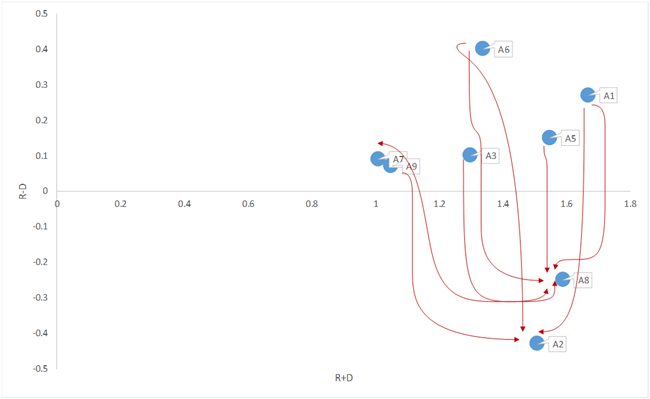
Note. Technical skills of teachers and students; A2 – Social and security skills and understanding of privacy; A3 – Selection of additional add-ons in online education according to the level of interest among students; A4 – Creating attractive digital content using the facilities and capabilities of the digital space (e.g., multimedia); A5 – Appropriate technical and technological infrastructure; A6 – Existence of intelligent evaluation systems considering individual characteristics; A7 – Interactive, continuous, and integrated communication with students; A8 – Online and intelligent monitoring and management systems; A9 – Ability to expand access to technology.
Discussion and Implications
The results of the fuzzy DEMATEL analysis reveal several important insights into the structure of relationships among the factors influencing the empowerment of smart education. The analysis not only identifies the most important factors but also distinguishes between those that act as causal drivers and those that function primarily as resulting factors within the system.
The findings indicate that the technical skills of teachers and students (A1) are among the most influential factors in the system. With the highest value of (D + R), this factor demonstrates the strongest overall interaction with other variables. This result confirms previous studies emphasising the critical role of digital competencies in the effective implementation of smart education environments (Morgado et al., 2021; Shakhina et al., 2023). Teachers and students who possess strong digital skills are better able to utilise digital tools, participate in online learning environments, and adapt to technological innovations in education.
Another significant factor identified in the analysis is appropriate technical and technological infrastructure (A5). The results show that infrastructure plays a central role in enabling other elements of smart education. Without reliable internet connectivity, digital platforms, and technological support systems, implementing innovative learning methods becomes difficult. This finding is consistent with earlier research highlighting infrastructure as a foundational condition for digital transformation in education (Roslina et al., 2017; Zhou et al., 2023).
The creation of attractive digital learning content (A4) also emerged as an important driver within the system. Engaging multimedia materials and interactive learning environments can significantly increase students’ motivation and participation in digital learning systems. This supports previous studies suggesting that the effectiveness of technology-enhanced education depends not only on access to technology but also on the quality and design of digital learning materials (Cui, 2023).
In contrast, several factors were identified primarily as effect factors, meaning that they are influenced by other variables in the system. For example, social and security skills and understanding of privacy (A2) and online monitoring and management systems (A8) show negative values in the (D – R) indicator, indicating that they are mainly affected by other enabling factors rather than acting as primary drivers. This suggests that improvements in infrastructure, digital competencies, and content development may indirectly contribute to strengthening these aspects of smart education systems.
The causal relationships identified in the study also highlight the importance of integrated communication with students (A7) and access to technology (A9) as supporting elements in the development of smart education ecosystems. These factors help create a more interactive and inclusive learning environment where students can actively participate in digital learning processes.
From an educational perspective, the findings highlight the importance of strengthening digital competencies among teachers and students. Educational institutions should invest in continuous professional development programs that help educators acquire both technical and pedagogical skills necessary for teaching in digital environments. Training programs focusing on digital pedagogy, instructional design, and the effective use of educational technologies can significantly improve the quality of smart education systems.
Furthermore, the development of high-quality digital learning content should be considered a strategic priority. Interactive multimedia resources, adaptive learning materials, and student-centred instructional designs can enhance learner engagement and support more effective knowledge acquisition.
At the institutional level, the results emphasise the importance of developing appropriate technological infrastructure and governance mechanisms. Educational institutions must ensure reliable access to digital platforms, learning management systems, and communication technologies that support online and blended learning.
In addition, the implementation of intelligent monitoring and evaluation systems can help institutions track learning outcomes, identify areas for improvement, and ensure the quality of digital education programs. Institutional policies should therefore promote the integration of digital technologies into teaching, learning, and assessment practices.
The findings also have important implications for educational policy and strategic planning. Governments and educational authorities should prioritise investments in digital infrastructure and technology access in order to reduce inequalities in educational opportunities. Policies that promote digital inclusion and equitable access to educational technologies are essential for the successful implementation of smart education systems.
Moreover, policymakers should support the development of national digital education strategies that encourage collaboration between educational institutions, technology providers, and policymakers. Such strategies can help ensure that technological innovations are effectively integrated into educational systems while addressing issues such as data security, privacy protection, and ethical use of digital technologies.
Overall, the results demonstrate that empowering smart education requires a holistic, systemic approach that integrates technological infrastructure, digital competencies, pedagogical innovation, and supportive institutional policies. Understanding the causal relationships among these factors can help educators, administrators, and policymakers design more effective strategies for the development of smart education in the digital era.
Conclusion
The rapid development of digital technologies has significantly transformed educational systems worldwide, accelerating the transition toward smart and technology-enhanced learning environments. In this context, understanding the key factors that empower smart education has become an important research and practical challenge. The aim of this study was to identify the critical factors influencing the empowerment of smart education and to analyse the causal relationships among these factors using the fuzzy DEMATEL method.
Based on a comprehensive literature review, an initial set of twenty potential factors influencing smart education empowerment was identified. Through expert evaluation and refinement, this list was reduced to nine key enabling factors representing technological, pedagogical, organisational, and social dimensions of smart education systems. The fuzzy DEMATEL analysis was then applied to examine the cause-and-effect relationships among these factors.
The results indicate that teachers’ and students’ technical skills, technological infrastructure, and the creation of attractive digital learning content are among the most influential drivers in the system. These factors play a critical role in enabling other elements of smart education and significantly influence the development of effective digital learning environments. In particular, the findings highlight that improving digital competencies and ensuring access to appropriate technological infrastructure are essential prerequisites for the successful implementation of smart education initiatives.
In contrast, factors such as social and security skills, online monitoring systems, and interactive communication with students were identified primarily as effect factors within the system. This suggests that improvements in infrastructure, digital competencies, and digital learning resources may indirectly enhance these elements of smart education environments.
The study contributes to the existing literature by providing a causal framework for understanding the interrelationships among factors influencing the empowerment of smart education. Unlike previous studies that primarily identify individual determinants, this research demonstrates how these factors interact within a broader system and highlights the key drivers that influence other components of digital learning ecosystems.
From a practical perspective, the findings suggest that educational institutions and policymakers should prioritise investments in digital infrastructure, teacher training, and the development of high-quality digital learning content. Strengthening digital competencies among educators and students can significantly enhance the effectiveness of technology-enhanced learning environments. At the same time, institutional governance mechanisms and monitoring systems should support the integration of digital technologies into teaching and learning processes.
Despite its contributions, this study has several limitations. First, the analysis is based on expert evaluations, which may reflect subjective judgements and may not fully represent all perspectives within the educational sector. Second, the number of experts involved in the evaluation process was limited. Future research could expand the sample of experts and apply alternative analytical approaches to validate the findings. Further studies may also explore the application of other multi-criteria decision-making methods or empirical data to examine the relationships among smart education factors in different educational contexts.
Overall, the findings of this study highlight the importance of adopting a systemic and integrated approach to the development of smart education. By understanding the causal relationships among technological, pedagogical, organisational, and social factors, educational stakeholders can design more effective strategies to support digital transformation and improve the quality of education in the digital era.
References
- Aisner, L. Y. (2019). Smart education system for digital society. In Proceedings of the International Scientific Conference “Problems of Modern Agrarian Science” (pp. 368–371).
- Chen, X., Zou, D., Cheng, G., Xie, H., & Jong, M. S. (2023). Blockchain in smart education: Contributors, collaborations, applications, and research topics. Education and Information Technologies, 28(4), 4597–4627. https://doi.org/10.1007/s10639-022-11399-5
- Cui, Q. (2023). Multimedia teaching for applied linguistic smart education system. International Journal of Human–Computer Interaction, 39(1), 272–281. https://doi.org/10.1080/10447318.2022.2122111
- Dmitrenko, N. Y., Voloshyna, O. V., Kizim, S. S., Mnyshenko, K. V., & Nahorniak, S. V. (2023, March). Smart education in the prospective teachers' training. CTE Workshop Proceedings, 10, 414-429. https://doi.org/10.55056/cte.568
- Dolati, A., Siadat, S. A., & Dehgani, H. (2018). Identification and prioritization of factors affecting the improvement of teaching–learning at smart schools. Interdisciplinary Journal of Virtual Learning in Medical Sciences, 9(3), 68777. https://doi.org/10.5812/ijvlms.68777
- Gupta, B. B., Gaurav, A., & Panigrahi, P. K. (2023). Analysis of the development of sustainable entrepreneurship practices through knowledge and smart innovative based education system. International Entrepreneurship and Management Journal, 19(2), 923-940. https://doi.org/10.1007/s11365-023-00853-6
- Irwansyah, I., & Puspitaningrum, D. (2021). A confirmatory factor analysis of digital empowerment dimensions in senior high school students. Elementary Education Online, 20(4), 77–88. https://ilkogretim-online.org/index.php/pub/article/view/5941
- Kadam, S. S. (2023). Smart Learning using IOT Technology. International Journal of Advanced Research in Science, Communication and Technology, 3(5), 682-684. https://doi.org/10.48175/ijarsct-11801
- Kamenskih, A. (2022). The analysis of security and privacy risks in smart education environments. Journal of Smart Cities and Society, 1(1), 17-29. https://doi.org/10.3233/scs-210114
- Majid, M. Z. A., Norman, M. H., Zaini, M. H., Zulnaidi, H., & Nasir, M. K. M. (2025). Technological empowerment in education: A systematic review. SAGE Open, 15(1). https://doi.org/10.1177/21582440251325077
- Martínez-Bravo, M. C., Sádaba-Chalezquer, C., & Serrano-Puche, J. (2022). Dimensions of digital literacy in the 21st century competency frameworks. Sustainability, 14(3), 1867. https://doi.org/10.3390/su14031867
- Morgado, J. C., Lencastre, J. A., Freires, T., & Bento, M. (2021). Smart education as empowerment: Outlining veteran teachers’ training to promote digital migration. Technology, Knowledge and Learning, 26(4), 897-916. https://doi.org/10.1007/s10758-021-09494-6
- Murphy, M. (2019). On the same page: Collaborative research assignment design with graduate teaching assistants. Reference Services Review, 47(3), 343–358. https://doi.org/10.1108/RSR-04-2019-0027
- Rathore, S., & Sharma, S. (2025). Digital empowerment of teachers: Challenges and opportunities in the 21st-century learning ecosystem. International Journal of Research - Granthaalayah, 13(2), 250-254. https://doi.org/10.29121/granthaalayah.v13.i2.2025.6657
- Roslina, Zarlis, M., Mawengkang, H., & Sembiring, R. W. (2017). The role of information and communication technology in developing smart education. Journal of Physics: Conference Series, 890(1). https://doi.org/10.1088/1742-6596/890/1/012091
- Shakhina, I., Podzygun, O., Petrova, A., & Gordiichuk, G. (2023). Smart education in the transformation digital society. Modern Information Technologies and Innovation Methodologies of Education in Professional Training Methodology Theory Experience Problems, 67(1), 51-64. https://doi.org/10.31652/2412-1142-2023-67-51-64
- Shu, X., & Gu, X. (2023). An empirical study of A smart education model enabled by the edu-metaverse to enhance better learning outcomes for students. Systems, 11(2), 75. https://doi.org/10.3390/systems11020075
- Singh, H., & Miah, S. J. (2020). Smart education literature: A theoretical analysis. Education and Information Technologies, 25(4), 3299–3328. https://doi.org/10.1007/s10639-020-10116-4
- Stojanović, D., Bogdanović, Z., Petrović, L., Mitrović, S., & Labus, A. (2023). Empowering learning process in secondary education using pervasive technologies. Interactive Learning Environments, 31(2), 779-792. https://doi.org/10.1080/10494820.2020.1806886
- Triwiyanto, T., Mubarika, F. D., Adriansyah, R. R., Dilshad, R. M., Agustina, G., Fitria, E. W. N., & Abusamra, A. (2022). Digital Technology Transformation and Empowerment of Technology: A New Paradigm of Classroom Management for an “Merdeka Belajar” Policy in Indonesia. 8th International Conference on Education and Technology, ICET (pp. 293-297). IEEE. https://doi.org/10.1109/ICET56879.2022.9990725
- Visvizi, A., Troisi, O., & Grimaldi, M. (2023). Exploring the drivers for digital transformation in smart education: An ecosystems approach. ITM Web of Conferences, 51, 01003. https://doi.org/10.1051/itmconf/20235101003
- Wang, S., Shi, G., Lu, M., Lin, R., & Yang, J. (2021). Determinants of active online learning in the smart learning environment: An empirical study with PLS-SEM. Sustainability, 13(17), 9923. https://doi.org/10.3390/su13179923
- Weber-Lewerenz, B. C. (2022). Education and training in the digital era: A compass for “Building Forward Better.” In A. Petrillo, F. De Felice, M. V. Achim, & N. Mirza (Eds.), Digital Transformation. Towards New Frontiers and Business Opportunities. https://doi.org/10.5772/intechopen.102678
- Yang, J., Sun, Y., Lin, R., & Zhu, H. (2024). Strategic framework and global trends of national smart education policies. Humanities and Social Sciences Communications, 11, 1183. https://doi.org/10.1057/s41599-024-03668-0
- Zadeh, L. A. (1965). Fuzzy sets. Information and Control, 8(3), 338–353. https://doi.org/10.1016/S0019-9958(65)90241-X
- Zhou, L., Meng, W., Wu, S., & Cheng, X. (2023). Development of digital education in the age of digital transformation: Citing China’s practice in smart education as a case study. Science Insights Education Frontiers, 14(2). https://doi.org/10.15354/sief.23.or095
- Zimmerman, M. A. (2000). Empowerment theory: Psychological, organizational, and community levels of analysis. In J. Rappaport, & E. Seidman (Eds.), Handbook of community psychology (pp. 43–63). Kluwer Academic Publishers. https://doi.org/10.1007/978-1-4615-4193-6_2
 https://orcid.org/0000-0002-6500-6708