

About the article
DOI: https://www.doi.org/10.15219/em112.1733
The article is in the printed version on pages 25-34.
 Download the article in PDF version
How to cite
Bei, H., Tabor-Błażewicz, J., & Konopatska, O. (2025). Artificial intelligence in the functioning of HR processes: Experience of Poland and Ukraine. e-mentor, 5(112), 25-34. https://www.doi.org/10.15219/em112.1733
E-mentor number 5 (112) / 2025
Table of contents
- Introduction
- Literature Review
- Comparative Conditions for AI Adoption in HR: Ukraine vs. Poland
- Methods
- Findings
- Discussion
- Conclusions
- References
About the author
Artificial Intelligence in the Functioning of HR Processes: Experience of Poland and Ukraine
Hanna Bei, Joanna Tabor-Błażewicz, Oleksandra Konopatska
Abstract
The article examines the role of artificial intelligence (AI) and generative artificial intelligence (GenAI) in Human Resource Management, with a focus on the comparative experiences of Poland and Ukraine. While traditional AI in HRM focuses on predictive analytics and automation, GenAI introduces novel capabilities for content creation and personalised communication. Theoretically grounded in the Technology Acceptance Model (TAM), the study investigates adoption levels, perceived advantages, and systemic risks. The research employs an exploratory methodology based on a quantitative survey of HR specialists (n = 90). The findings indicate that while the total sample comprises 90 professionals, specific adoption patterns were analysed among those already implementing AI tools (n = 32 in Poland; n = 19 in Ukraine). The study reviews key literature sources and presents the results of a quantitative survey of human resource management specialists. According to the results, Poland has advantages in terms of stronger institutional capacity, clarity of the regulatory framework, and economic stability. However, its approach to implementing AI in HRM remains cautious. Despite infrastructure and regulatory constraints, Ukraine has demonstrated a higher level of experimental implementation, primarily in automating operational activities and creating recruitment-related content. Both Ukrainian and Polish HR professionals share a similar view on the benefits of applying AI, including improved HR management efficiency, more accurate recruitment processes, better onboarding results for new employees, and the ability to make data-driven decisions that lead to better strategic outcomes. The most significant risks identified included personal data privacy concerns, management bias, over-reliance on technology, and organisational resistance to change. The study concludes by emphasising the necessity of ethical frameworks and targeted digital literacy programs to support sustainable AI-driven HRM solutions.
Keywords: artificial intelligence, generative artificial intelligence, HR department, HR functions, HR processes, AI-driven solutions, AI tools
Introduction
In the era of rapid digitalisation and automation, disruptive technologies, namely artificial intelligence (AI) and generative artificial intelligence (GenAI), are recognised as playing an increasingly important role in many business processes, in particular in Human Resource Management (HRM) (Eubanks, 2022). AI represents itself as a complex revolutionary technology, a computer system designed to perform tasks typically performed by humans and is seen as a driving force in the world of work (Huang & Rust, 2018). AI is defined as a broad branch of computer science aimed at building systems capable of performing tasks that typically require human intelligence, such as reasoning, learning, and decision-making (Barret & Miller, 2024). Its impact on management in general and human resource management in particular has been a constant focus of attention in the spotlight of scientists and researchers since the very first successful implementation (Berente et al., 2021; Iyer et al., 2025; Williams, 2025). This attention is driven by the potential opportunity to optimise recruitment processes, improve onboarding smoothness, increase employee training quality and flexibility, and facilitate data-driven decision-making (Dennis & Aizanberg, 2023; Reilly, 2018; Tambe et al., 2019; Vrontis et al., 2022).
GenAI is a specific subset of AI technologies that uses models to generate new content, such as text, images, code, or audio, based on the patterns it learned from existing data and has its own potential to be applied in HRM (Bučková & Przyłuska-Schmitt, 2025; Dasborough, 2023; Feuerriegel et al., 2024). When general AI technologies are commonly used in HR for Predictive Analytics purposes and for automation, GenAI is mostly considered for content creation (Garcia & Kwok, 2025; Gowri et al, 2025; Semujanga & Mikalef, 2024). Even though general AI is already described as a catalyst for economic growth in Central and Eastern Europe. For example, recent studies show that generative AI could boost GDP by €90-100 billion per year (5%) and up to 8% of GDP per year in an accelerated scenario (Bernardelli et al., 2025). Overall, the applicability of AI and GenAI tools in the practice of human resource management professionals is of wide interest, with the first successful application cases. However, this experience remains fragmented, as different countries and industries demonstrate varying rates of disruptive technology adoption, legal requirements, and the speed and flexibility of integration.
Thus, the article examines the role of artificial and generative intelligence in HR management processes by comparing experiences of both Poland and Ukraine. The study identifies challenges and prospects for the further development of AI in HR and suggests possible steps to optimise its application in HR specialists’ functions and processes. The relevance of such a comparative analysis is determined by the fact that both countries are actively developing their technology sectors and adapting to global automation trends. Poland demonstrates a structured approach to integrating advanced AI-based HR management practices, supported by EU procedures and frameworks, while Ukraine, with its dynamic IT sector, is prone to experimenting with AI in HR to address operational issues and workforce limitations amid wartime difficulties.
In the field of management science, the implementation of artificial intelligence remains innovative, and there is a lack of in-depth research. This creates a research gap that this article seeks to address. Thus, the following research questions were formulated:
- To what extent have AI technologies been integrated into HR management functions within Polish and Ukrainian organisations?
- How do HR practitioners in Poland and Ukraine perceive the balance between the operational efficiencies and the ethical or systemic risks associated with the implementation of Artificial and Generative AI?
- What is the current state of AI-related digital literacy and professional orientation among HR specialists in both countries, and how does this influence their readiness for AI adoption?
To answer these questions, the study employed a two-stage research design: (1) a review of relevant literature and (2) an empirical quantitative survey conducted with HR professionals in both countries.
Literature Review
The growing interest in the implementation of artificial intelligence and other revolutionary technologies in HR management is explained by several interrelated factors (Charlwood & Guenole, 2022; Fenech et al., 2019; Guenole & Feinzig, 2018; Nar et al., 2024). First, general AI has the potential to improve the efficiency and accuracy of key HR functions, primarily recruitment, routine process optimisation, workforce analysis, training, and technical tasks. Initial attempts to utilise AI in HR have already demonstrated tangible benefits, including speeding up processes, reducing task overload, and improving decision-making efficiency. Updating onboarding programs for new employees, staff training and development, and talent management issues related to AI applications are also recognised in various studies as promising and relevant (Manoharan, 2024; Nyathani, 2023; Votto et al., 2021; Williams, 2025).
HR leaders and professionals demonstrate a strategic view of AI, not only as a tool for improving operational performance, but also as a means of optimising decision-making for a long-term perspective (Berente et al., 2021; Iyer et al., 2025). The ability of AI technologies to analyse large datasets quickly and reliably, identify hidden patterns, and generate practical insights enables the development of more informed HR strategies and greater flexibility compared to competitors (Aydin et al., 2024; Vrontis et al., 2022).
GenAI usage examples include drafting personalised job descriptions, generating interview questions based on a specific role, or creating employee training materials from scratch (Bučková & Przyłuska-Schmitt, 2025; Dashborough, 2023).
Nevertheless, the level of artificial intelligence implementation varies across different industries and countries due to different economic conditions, degree of organisational readiness, and technological infrastructure development, which play a decisive role in accelerating the pace and determining the scale of AI integration. In addition, corporate culture characterised by strict professional standards, aversion to risky decisions, or strict control over employee autonomy, in most cases, slows down the adoption of AI technologies. This is especially true when there are simultaneous concerns about cybersecurity and corporate data protection when using digital technologies (Michailidis, 2018). Under such conditions, the transformational potential of AI is limited by the need to strike a balance between innovation and management control (Qamar et al., 2021; Spossato, 2025).
At the first stage of the research, the main scientific approaches to AI and GenAI in HR implementation were summarised. This approach made it possible to identify the main advantages and risks of AI integration into HR processes, as well as to conduct a comparative analysis of conditions in Poland and Ukraine to assess their influence on AI technology adoption.
The main advantages of AI in HR, according to global best practices (Eubanks, 2022; Guenole & Feinzig, 2018), include:
- efficiency in automation of streamlining repetitive tasks such as CV screening, interview scheduling, perks and benefits management, and other routine processes;
- enhanced recruitment accuracy according to improved candidate matching based on automated skills review, experience, and cultural fit, reduced hiring bias and subjectivity of human decisions;
- enabling evidence-based HR strategies with data-driven decision-making achieved by advanced HR analytics, able to provide brief and deep insights into workforce trends on the labour market, talent gaps, and employee performance results;
- efficiency of a continuous learning and development system supported by personalised training recommendations and adaptive AI-based learning platforms for skill-building;
- improved employee experience in onboarding processes with the help of AI chatbots and virtual assistants that provide round-the-clock HR support and facilitate smoother service.
At the same time, significant risks and disadvantages have been identified (Charlwood & Guenole, 2022; Dennis & Aizenberg, 2023), such as:
- potentially discriminatory outcomes of AI systems risk reproducing or amplifying biases embedded in training data;
- data security and privacy protection during the collection and processing of large-scale employee datasets by AI tools (cybersecurity issue);
- over-reliance on technology caused by AI solutions may undermine human judgement and empathy in HR decision-making;
- expected high implementation costs of developing, integrating, and maintaining AI solutions and resistance to change by employees fearing job displacement or reduced autonomy in decision-making;
- more regulatory challenges with legal and ethical debates over transparency, accountability, and trust in AI-generated decisions.
Comparative Conditions for AI Adoption in HR: Ukraine vs. Poland
Both Ukraine and Poland are demonstrating a growing interest in integrating AI into their HR practices. However, differences have been primarily identified in the conditions under which AI is being implemented. These differences are evident in economic development, technological capabilities, and institutional frameworks.
In Poland, AI implementation in HR is receiving a significant boost thanks to a relatively well-developed digital infrastructure, stable macroeconomic conditions, and integration with the European Union’s regulatory framework. Access to EU innovation funding and legal support provides companies with the financial resources and governance structures needed to responsibly implement AI in HR processes. Previous studies (Tabor-Błażewicz, 2023) show that HR professionals in Poland are supportive of the idea of implementing AI. They report many advantages and challenges associated with this process, but are also hesitant about the level of their own knowledge of the subject.
The actual pace of implementation remains slow, as only 5.9% of Polish companies have confirmed the implementation of AI in their activities, compared to the EU average (13.5%) (Bernardelli et al., 2025). Moreover, the level of digital maturity remains below the EU indicators: only 44.3% of Poles have shown an appropriate level of basic digital skills, compared to 55.6% in the EU. This cautious approach is most likely achieved due to risk aversion, resource constraints, or the prevalence of other strategic priorities for organisational development, which may slow down wider adoption of AI in Poland.
Analysing conditions in Ukraine, the growing interest in AI for HR management is likely driven by the need to achieve short-term operational efficiency. Ukrainians tend to speed up decision-making under remote working conditions and to retain talent in extremely challenging socio-economic conditions. Here, the widespread adoption of AI is limited by several factors: territorial gaps in the development of digital infrastructure (in both urban and rural areas), limited access to investment capital, and institutional and legal reform issues. Ukraine is characterised by a lack of a unified national regulatory framework for AI implementation and the ongoing process of harmonising personal data protection legislation with EU standards, which creates additional constraints for employers in terms of cybersecurity and ethical compliance (Tsymbaliuk et al., 2022). At the same time, this issue acts as a catalyst for innovation, giving Ukrainian companies more flexibility and encouraging them to experiment with AI tools. Technology-oriented companies and start-ups have made significant progress in implementing AI to automate HR routine tasks, optimise recruitment algorithms, develop training platforms for better reskilling, and protect human capital (Bei & Didyk, 2024).
In the long term, the described conditions and trends will benefit both countries: Poland to achieve a more structured implementation and a balanced approach to the use of AI technologies, and Ukraine to develop a flexible set of AI-based HR management solutions suitable for a constantly changing environment.
Methods
The second stage of the research was based on a quantitative survey conducted in March-April 2025 using an original questionnaire developed by the authors. To ensure clarity and avoid misinterpretation across languages, the retranslation method was applied: the questionnaire was first translated from the original language into another, and then independently translated back by a different translator. This process confirmed the accuracy and consistency of the questions and concepts presented to respondents in both Poland and Ukraine.
The authors’ questionnaire was distributed online via direct contacts on professional social media platforms (LinkedIn, Facebook) and reached 90 HR professionals across both countries. Respondents were specifically selected to represent various business sectors and professional levels. Prior to distribution, the potential target group profile was analysed to ensure study relevance. Respondents received an invitation message with a link to the survey.
Of the total 66 responses in Poland and 24 in Ukraine, positive answers regarding the use of AI in HR processes were received from 32 participants in Poland (48.5%) and 19 in Ukraine (79.1%). These responses were subjected to a more in-depth analysis.
The sample composition reflects notable differences between the two countries. In Ukraine, respondents were primarily senior HR professionals, concentrated in the IT sector. In Poland, the sample included a more diverse range of sectors, with HR managers and senior specialists dominating. Ukrainian respondents were more likely to work in medium-sized companies (10–249 employees), while Polish participants were more likely to work in large companies (more than 500 employees). In terms of ownership, most respondents worked in domestic firms (70% in Poland and 76.2% in Ukraine), with the remainder employed by multinational companies (30% and 23.8% respectively). Details of the research sample were presented in Table 1.
Table 1Characteristics of the Research Sample
| Respondents profile details | Poland | Ukraine |
|
Position in the structure director/manager in Human Resources department director/manager in other department HR senior specialist HR junior specialist Other |
24.3% 21.2% 22.7% 12.1% 19.7% |
47.6% 9.5% 38.1% 4.8% - |
|
Experience in HR industry less than 1 year of experience 1-5 years of experience 6-10 years of experience 11-15 years of experience over 16 years of experience |
19.7% 50.0% 16.7% 6.0% 7.6% |
4.8% 42.9% 33.3% 9.5% 9.5% |
|
Industry sector of the company Banking Construction Finance and Insurance Industry Public Administration Commerce Services IT Other |
3% 4.5% 4.5% 12.1% 13.7% 3% 22.7% 13.7% 22.8% |
- - 4.7% 9.5% 4.7% 14.3% 4.7% 47.7% 14.4% |
|
Size of the company up to 10 employees 10-49 employees 50-249 employees 250-499 employees over 500 employees |
9% 17% 24% 15% 35% |
- 28.6% 38.1% 9.5% 23.8% |
|
Company’s headquarters In Poland / In Ukraine Internationally, with a branch in Poland / Ukraine |
70% 30% |
76.2% 23.8% |
Source: authors’ own work.
Findings
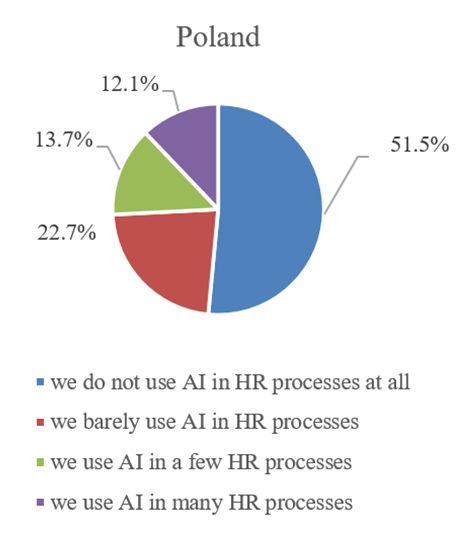
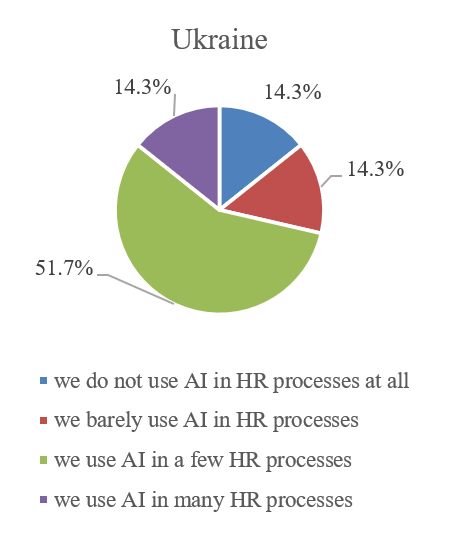
The survey results reveal clear differences between Poland and Ukraine in the AI adoption in HR processes. In Poland, most companies (51.5%) reported not using AI at all, while in Ukraine, 71.4% indicated that they had already integrated AI into at least some HR functions. This points to a more progressive adoption trend in Ukrainian organisations, particularly in areas of partial automation (Figure 1).
Figure 1Current Use of AI in HR Processes in Poland and Ukraine
Source: authors’ own work.
Among companies that have not used AI in HR processes, half of the Polish respondents (50%) stated they have no plans to do so. Equal proportions (33.3%) of Ukrainian participants either plan near-term (1–2 years) implementation or are undecided. In Poland, for comparison, around 20% of companies (both those planning to implement AI in their HR processes within the next 1-2 years and those planning to do so within the next 3-5 years) plan to implement AI in their HR processes. This suggests greater openness to future integration in Ukraine, although uncertainty persists in both countries, as AI and GenAI technologies are described as new and not well understood in their further implementation.
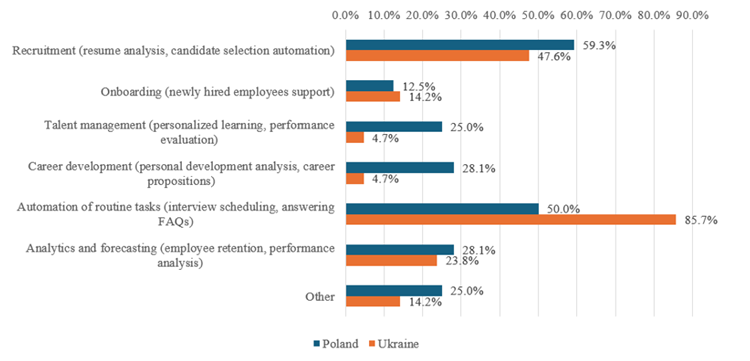
When asked about functions in which AI is already used or planned, automation of routine tasks was the universal priority (85.7% in Ukraine, 50% in Poland) (Figure 2). Recruitment-related applications – such as resume analysis and automated candidate selection – were particularly common in Poland (59.3%). Polish companies were also more likely to use AI in talent and career development (28.1%), while Ukrainian respondents emphasised operational efficiency, including market research, preparing reports, and multilingual content verification.
Figure 2HR Functions Using or Planning to Use AI in Polish and Ukrainian Companies
Source: authors’ own work.
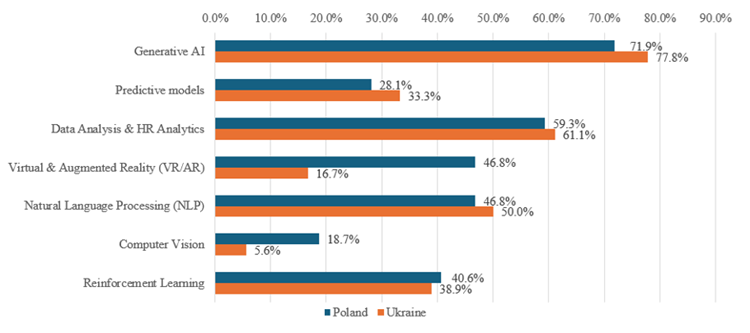
Generative AI ranked highest in perceived potential, especially in Ukraine (77.8%). Other promising applications included HR analytics and natural language processing (e.g., automated text analysis, resume screening). Polish respondents expressed comparable interest across most categories but showed greater attention to VR and AR technologies (46.8%), likely reflecting differences in innovation priorities and available resources (Figure 3).
Almost all respondents in both countries reported familiarity with GenAI models (94% in Poland, 100% in Ukraine), with widespread use for generating job descriptions, emails, and reports. Ukrainian companies reported more diverse adoption, using such tools as ChatGPT, BambooHR, and SAP, while Polish companies tended to rely primarily on ChatGPT. Text generation, virtual assistant support, and automation are dominant use cases, particularly in Ukraine. Less common in both countries is the use of productivity analysis tools and learning and development, such as Coursera for Business, Degreed, or EdCast. The list of additional platforms also cited by respondents includes Gemini, Notion, and Miro AI tools, Midjourney, Leonardo, Fellow, and Clever Staff.
Figure 3Technological Trends Considered the Most Promising in HR
Source: authors’ own work.
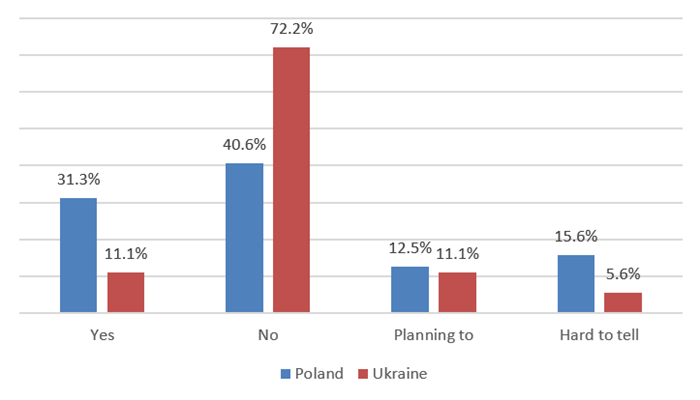
Collaboration with external AI providers was much more common in Poland (31.3%) than in Ukraine (11.1%). In Ukraine, the majority (72.2%) reported no external collaboration, which may reflect resource limitations, legal uncertainties, or a preference for in-house experimentation (Figure 4).
The main benefits of AI adoption cited in both countries included time savings (PL 93.7% / UA 85.7%), speed of operation (PL 75% / UA 61.9%), resource efficiency (PL 53.1% / UA 71.4%), and advanced data analysis capabilities (PL 65.6% / UA 71.4%). Polish respondents additionally highlighted error reduction (59.3%) and enhanced employee experience. Ukrainian respondents more often emphasised the advantage of 24/7 availability (52.3%), reflecting staffing and service challenges.
Concerns also varied. Polish respondents were more likely to cite lack of empathy (75%), data privacy risks (62.5%), and resistance to innovation (40.6%).
Figure 4External Collaboration (AI Solutions in HR Providers)
Source: authors’ own work.
In contrast, Ukrainians were more concerned about over-reliance on templated AI responses (66.6%) and less likely to see resistance to change as a barrier (4.7%). Both groups expressed moderate concerns about creativity loss and potential job displacement (Table 2).
Table 2Benefits and Potential Risks / Challenges in Using AI in HR in Poland and Ukraine
| Benefits | Potential Risks / Challenges |
| reduction of time spent on routine tasks – PL 93.7% / UA 85.7% | dependence on technology – PL 43.7% / UA 23.8% |
| improvement of decision-making accuracy – PL 16.7% / UA 0% | ethical concerns (bias. decision transparency) – PL 53.1% / UA 23.8% |
| enhancement of the candidate/employee experience – PL 28.1% / UA 14.2% | data privacy threats – PL 62.5% / UA 42.8% |
| saving resources – PL 53.1% / UA 71.4% | resistance to innovations (from employees. management level) – PL 40.6% / UA 4.7% |
| elimination of so-called ‘human’ errors – PL 59.3% / UA 33.3% | lack of empathy and ‘human’ approach – PL 75.0% / UA 52.3% |
| work 24/h a day – PL 15.6% / UA 52.3% | lack of understanding of complicated issues. template responses by virtual assistants – PL 59.3% / UA 66.6% |
| speed of operation – PL 75.0% / UA 61.9% | lack of creativity – PL 31.2% / UA 33.3% |
| lack of emotion in decision-making – PL 15.6% / UA 0% | machines taking people’s jobs – PL 28.1% / UA 19.0% |
| ability to analyse big data – PL 65.6% / UA 71.4% | difficulty in understanding and implementing software or algorithm – PL 32.3% / UA 14.2% |
Source: authors’ own work.
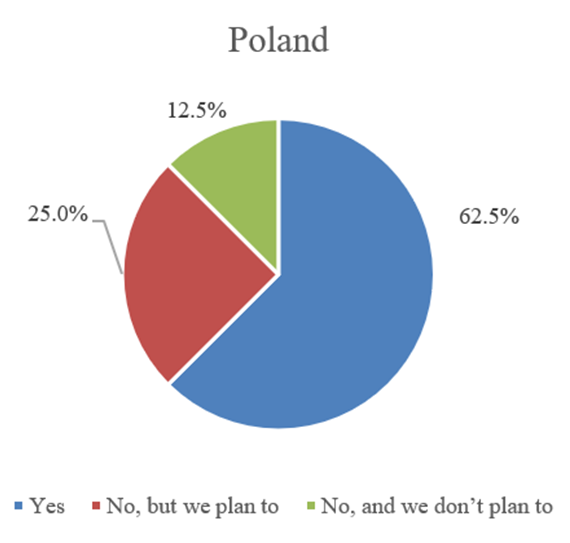
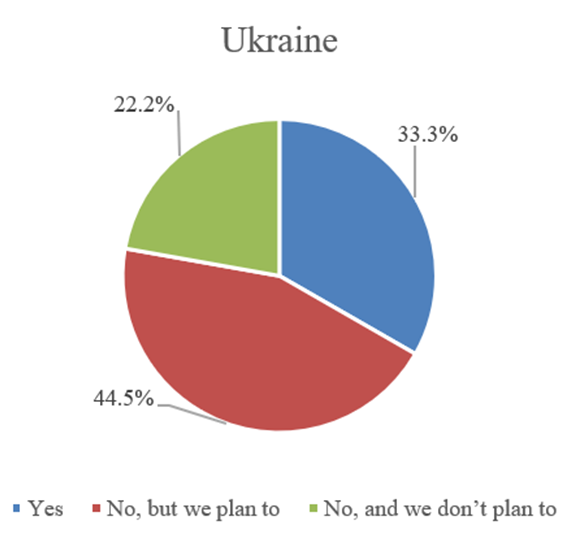
Training patterns also differed. More Polish companies (62.5%) had already provided AI-related training, compared to 33.3% in Ukraine, which led in planned training (44.5%). This shows rising awareness among HR staff of the need to upskill to work effectively with AI tools and growing concerns about its potential (Figure 5).
Figure 5Plans to Provide AI Training to Employees in Poland and Ukraine
Source: authors’ own work.
According to the research results, AI’s overall impact on HR processes is described as generally positive. In Ukraine, the dominant view was that AI has a moderately positive effect (72.2%), while in Poland, 40.6% described its impact as very positive. No respondents in both countries considered the impact entirely negative.
When asked to assess their country’s overall level of AI implementation in HR, both groups tended to classify it as medium (62.5% in Poland, 72.2% in Ukraine). Polish respondents, however, were more likely to describe it as low (37.5%), whereas a small share of Ukrainians (5.6%) rated it as high.
Respondents also commented on the impact of legislation on the effectiveness of AI implementation in HR management processes. Most Ukrainians (55.6%) believe that national legislation does not affect the use of AI in human resource management (possibly due to the lack of a clear regulatory framework). In Poland, most respondents (65.6%) are unsure about the nature of this impact, while 12.5% believe it is rather negative.
Across both countries, respondents highlighted the need to:
- expand AI-related training, especially for individual use;
- prioritise automation of routine (repetitive) tasks to free HR staff for strategic initiatives;
- closely monitor evolving legislation and ensure ethical compliance;
- strengthen collaboration with technology providers to accelerate responsible adoption.
The observed discrepancy in AI adoption, with more than half of Polish respondents reporting no AI usage compared to only one-third in Ukraine, is striking, given that the Polish sample contained a higher proportion of large enterprises (50% vs. 33% in Ukraine). Theoretically, larger firms have greater economies of scale to offset the high costs of implementing AI. However, our findings suggest that in Poland, adoption is moderated by a ‘compliance-first’ approach. The stringent regulatory environment of the EU (notably GDPR) and internal corporate risk-mitigation policies often slow the integration of AI in HR processes.
In contrast, Ukraine’s higher experimental adoption (71.4%) reflects a ‘digital-first’ resilience strategy. Supported by national digital transformation initiatives like Diia City, which lower regulatory friction, Ukrainian HR practitioners appear more willing to leverage accessible AI tools to maintain operational efficiency amidst socio-economic instability. This aligns with the Technology Acceptance Model (TAM), where the ‘perceived usefulness’ of AI for organisational survival in Ukraine outweighs the ‘perceived ease of use’ or regulatory risks that dominate the Polish context.
Discussion
The results of the study highlight the complex interplay among technological readiness, organisational culture, and the quality of the regulatory environment in implementing AI in human resource management. Clear contrasts have been identified between the current implementation process and plans regarding the first research question. Poland, for example, has advantages and can be identified as a country more conducive to the development and implementation of AI solutions, thanks to its well-developed digital infrastructure and management systems aligned with EU standards. It was found that, in general, the pace of implementation remains moderate, likely due to risk aversion, resource allocation issues, or, more importantly, strategic priorities for organisational development in Polish companies. Ukrainian companies are characterised by a higher frequency of AI application, particularly for automating and optimising routine HR tasks. GenAI is widely used in recruitment, employee onboarding processes, HR analytics, and data-driven decision-making, both in the short and long term, reflecting a flexible approach. Greater flexibility has been shaped by the challenges posed by the economic and political situation, operational pressure, workforce mobility, an unbalanced labour market, and resource limitations.
Regarding the second question of the study – balancing operational efficiencies and the ethical or systemic risks associated with the implementation of AI and GenAI – the study confirms that while both Polish and Ukrainian HR practitioners recognise universal benefits (such as enhanced processing speed and data-driven decision-making), their perception of risk is heavily mediated by national context. In both countries, respondents identified general risks, including the problem of overcoming subjective bias, ethical risks (replacing human labour and experience with automated results), data security issues, and excessive dependence on technology in the future; however, the significance of these risks is assessed differently in the two countries. Polish respondents expressed greater concern about data privacy, loss of empathy, and resistance to innovation, while Ukrainians are more concerned about excessive dependence on technology and the generic nature of AI-generated responses. Consequently, the research underscores that achieving an effective balance requires not only unified regulatory standards but also locally adapted ethical guidelines that account for these distinct professional orientations.
Answering the third research question, clear patterns can also be observed. Polish HR specialists tend to prioritise AI-based professional solutions aimed at improving recruitment, talent management, and career development. This approach can be described as characteristic of strategic improvement in a relatively stable environment. Ukrainian specialists focus on operational efficiency, rapid process automation, and multilingual content creation for various purposes and tasks when working with specialists outside the country, reflecting an adaptive approach amid high instability and limited resources. Thus, specific factors in the implementation of disruptive technologies and the specifics of their support in both countries were identified.
Our empirical findings regarding the high prioritisation of AI in recruitment and operational automation (over 70% in the Ukrainian sample) align with the global trends identified by Barret & Miller (2024), who argue that HR functions with high data volume are the primary entry points for AI adoption. However, the notable caution among Polish HR professionals, despite their stronger institutional backing, suggests that ‘perceived risk’ (particularly concerning data privacy and GDPR compliance) acts as a significant moderator in the technology acceptance framework, as previously theorised by Vrontis et al. (2022). Furthermore, the striking difference in adoption rates between the two countries, regardless of company size, supports the view of Charlwood & Guenole (2022) that idiosyncratic organisational needs and regional digital readiness are often more decisive than traditional structural factors like enterprise scale.
Despite the insights gained, this study has certain limitations that should be acknowledged. First, the sample size of HR professionals actively using AI is relatively small, which limits the ability to generalise the findings to the entire HR sector in both countries. The second limitation is the predominance of big companies in the research sample. Third relates to the rapid changes observed in AI implementations, which may mean that, because of constant change, the results of the research will be valid only for a certain period. However, given the rapid and uneven adoption of AI technologies, this research was designed as an exploratory study. Its primary goal was not to provide exhaustive statistical proof, but to identify emerging trends, practical challenges, and comparative patterns in two distinct socio-economic environments. Future research with larger, more diverse samples is needed to validate these preliminary findings and to track the longitudinal impact of Generative AI on HR performance.
Conclusions
The study proves that the implementation of AI technologies in Human Resource Management is not purely a technological process and does not occur in the same way in all countries. In Poland, institutional capacity, developed digital infrastructure, and a clear regulatory framework, which are favourable conditions for scaling up the use of AI, are combined with a cautious and gradual approach to implementation. Ukraine, on the other hand, demonstrates a more experimental and operationally driven approach to implementation, despite its weak institutional framework and limited resources.
Both countries recognise the potential of AI to transform the overall efficiency of HR processes, the quality of recruitment, data analysis, and informed decision-making, and improve the employee experience during onboarding and subsequent service by HR professionals. However, the extent of these benefits depends on how effectively organisations address ongoing risks, including data privacy concerns, algorithmic bias, over-reliance on technology, and resistance to change.
Our targeted recommendations for HR practitioners could be:
- Polish organisations: focus on developing clear internal ethical frameworks and data governance policies to bridge the gap between regulatory caution and technological potential, develop partnerships with technology providers to access scalable, reliable solutions;
- Ukrainian organisations: foster transition from fragmented, experimental AI usage toward systemic, strategy-aligned implementation through dedicated digital literacy programs for HR staff, expanding AI-related training to build workforce competence and confidence in AI use;
- policy makers in both countries: foster cross-border knowledge exchange to harmonise ethical standards while maintaining the agility observed in emerging digital markets.
Future research on this topic could focus on analysing long-term trends in the implementation of AI technologies in HR, measuring the economic and social impact of their use, and determining the role of EU and national legislation in ensuring ethical and sustainable practices.
Despite the limitations of the study, its results reduce gaps in research on the implementation of AI in human resource management, thanks to the comparative perspective of Poland and Ukraine.
From a practical point of view, the results of the study can help businesses better understand their positioning regarding the use of AI technologies, understand the national and regional context, and identify opportunities for gaining competitive advantages.
From a social perspective, the study confirmed a high level of concern about the risks of AI implementation, even if its intensity varies across countries. General concerns about ethics, data privacy, and the human dimension of HR management remain central issues in the debate on the integration of AI technologies into HR management and other areas.
References
- Aydin, O., Karaarslan, E., & Gokce Narin, N. (2024). Artificial Intelligence, VR, AR, and Metaverse Technologies for Human Resources Management. Computers and Society. https://doi.org/10.48550/arXiv.2406.15383
- Barrett, B., & Miller, C. (2024). The influx of artificial intelligence (AI) in the field of human resource management (HRM) is impacting the process of preparing expatriates for international assignments. 16th International Conference on Education and New Learning Technologies. Edulearn24 Proceedings (pp. 9189-9196).https://doi.org/10.21125/edulearn.2024.2214
- Berente, N., Gu, B., Recker, J., &Santhanam, R. (2021). Managing Artificial Intelligence. MIS Quarterly, 45(3), 1433–1450. https://doi.org/10.25300/misq/2021/16274
- Bernardelli, M., Bosek-Rak, D., Jaroni, C., Kamiński, B., Kędzior, E., Kubicki, P., & Tomaszewski, A. (2025). Impact of AI technology on economic growth – challenges and recommendations. In Report of the SGH Warsaw School of Economics and the Economic Forum 2025 (pp. 48–52). https://gazeta.sgh.waw.pl/sites/gazeta.sgh.waw.pl/files/387-SGH-raport-karpacz-2025.pdf
- Bei, H., & Didyk, Y. (2024). Features of integrating digital technologies into personnel development models. Economy and Society, 67. https://doi.org/10.32782/2524-0072/2024-67-22
- Bučková, J., & Przyłuska-Schmitt, J. (2025). The use of generative Artificial Intelligence in Human Resource Management: Transformation of HR processes and challenges for the future. In P. Madzík, C. Lukáš, & Č. Karol (Eds.), Data-centric business and applications. Lecture notes on data engineering and communications technologies, 253. Springer. https://doi.org/10.1007/978-3-031-89718-4_29
- Charlwood, A., & Guenole, M. (2022). Can HR adapt to the paradoxes of artificial intelligence? Human Resource Management Journal, 32(4), 729–742. https://doi.org/10.1111/1748-8583.12433
- Eubanks, B. (2022). Artificial Intelligence for HR: Use AI to support and develop a successful workforce. Kogan Page Publishers.
- Fenech, R., Baguant, P., & Ivanov, D. (2019). The changing role of human resource management in an era of digital transformation. Journal of Management Information & Decision Sciences, 22(2), 166-175.
- Feuerriegel, S., Hartmann, J., Janiesch, & Zschech, P. (2024). Generative AI. Business & Information Systems Engineering, 66(1), 111-126. https://doi.org/10.1007/s12599-023-00834-7
- Garcia, R. F., & Kwok, L. (2025). Generative artificial intelligence in human resource management: a critical reflection on impacts, resilience and roles. International Journal of Contemporary Hospitality Management, 37(9), 3136–3158. https://doi.org/10.1108/IJCHM-01-2025-0159
- Dasborough, M. T. (2023). Awe‐inspiring advancements in AI: The impact of ChatGPT on the field of organizational behavior. Journal of Organizational Behavior, 44(2), 177–179. https://doi.org/10.1002/job.2695
- Dennis, M. J., & Aizenberg, E. (2023). The ethics of AI in Human Resources. Ethics and Information Technology, 24(3), 25. https://doi.org/10.1007/s10676-022-09653-y
- Gowri, R., Senthil Kumar, S., & Dubey, N. K. (2025). Ethical AI framework for future SHRM research. Discover Artificial Intelligence, 5, 366. https://doi.org/10.1007/s44163-025-00641-x
- Guenole, N., & Feinzig, S. (2018). The business case for AI in HR. With insights and tips on getting started. IBM Watson Talent. https://forms.workday.com/content/dam/web/en-us/documents/case-studies/ibm-business-case-ai-in-hr.pdf
- Huang, M. H., & Rust, R. T. (2018). Artificial Intelligence in service. Journal of Service Research, 21(2), 155–172. https://doi.org/10.1177/1094670517752459
- Iyer, S., Mohan, A., & Bhaduri, A. (2025). Round table with HR leaders—The role of Artificial Intelligence and analytics in shaping workforce strategies. NHRD Network Journal, 18(2), 163-172. https://doi.org/10.1177/26314541251392728
- Manoharan, P. (2024). A review on AI-Driven HR systems: Revolutionizing HR systems and talent management. Scholars Journal of Engineering and Technology, 12(6), 179–184. https://doi.org/10.36347/sjet.2024.v12i06.001
- Michailidis, M. P. (2018). The challenges of AI and blockchain on HR recruiting practices. Cyprus Review, 30(2), 169–180.
- Nar, S., Rego, K., Scharff, C., & Hilger, A. M. (2024). The impact of Artificial Intelligence on HR practices. In M. T. Del Val Núñez, A. Yela Aránega, & D. Ribeiro-Soriano (Eds.), Artificial Intelligence and business transformation. Contributions to management science (pp. 149-162). Springer. https://doi.org/10.1007/978-3-031-58704-7_9
- Nyathani, R. (2023). AI-driven HR analytics: Unleashing the power of HR data management. Journal of Technology and Systems, 5(2), 15-26. https://doi.org/10.47941/jts.1513
- Qamar, Y., Agrawal, R. K., Samad, T. A., & Chiappetta Jabbour, C. J. (2021). When technology meets people: the interplay of artificial intelligence and human resource management. Journal of Enterprise Information Management, 34(5), 1339–1370. https://doi.org/10.1108/JEIM-11-2020-0436
- Reilly, P. (2018). The impact of artificial intelligence on the HR function. Institute for Employment Studies.
- Semujanga, B., & Mikalef, P. (2024). Exploring the productivity impacts of generative AI in organizations. In R. van de Wetering, R. Helms, B. Roelens, S. Bagheri, Y. K. Dwivedi, I. O. Pappas, & M. Mäntymäki (Eds.), Disruptive innovation in a digitally connected healthy world. 23rd IFIP WG 6.11 Conference on e-Business, e-Services and e-Society, LNCS 14907 (pp. 103-111). Springer. https://doi.org/10.1007/978-3-031-72234-9_9
- Spossato, M. (2025). The future of AI in HR: a speculative review. Strategic HR Review, 24(4), 180-182. https://doi.org/10.1108/SHR-02-2025-0015
- Tabor-Błażewicz, J. (2023). Artificial Intelligence adoption in Human Resources Management. In M. Hajdas (Ed.), Game changers in management (pp. 30-43). Publishing House of Wroclaw University of Economics and Business. https://doi.org/10.15611/2023.10.9.02
- Tambe, P., Cappelli, P., & Yakubovich, V. (2019). Artificial Intelligence in Human Resources Management: Challenges and a path forward. California Management Review, 61(4), 15–42. https://doi.org/10.1177/0008125619867910
- Tsymbaliuk, S., Vasylyk, A., & Bilyk, O. (2022). Artificial intelligence in HR: practices and prospects of the spread in Ukraine. In S. Tsymbaliuk, A. Vasylyk, & O. Bilyk (Eds.), The Eurasia Proceedings of Science, Technology, Engineering & Mathematics (EPSTEM), 17, 152–160. https://ir.kneu.edu.ua:443/handle/2010/39936
- Votto, A. M., Valecha, R., Najafirad, P., & Rao, R. (2021). Artificial Intelligence in Tactical Human Resource Management: A systematic literature review. International Journal of Information Management Data Insights, 1(2), 100047. https://doi.org/10.1016/j.jjimei.2021.100047
- Vrontis, D., Christofi, M., Pereira, V., & Trichina, E. (2022). Artificial intelligence, robotics, advanced technologies, and human resource management: a systematic review. The International Journal of Human Resources Management, 33(6), 1237-1266. https://doi.org/10.1080/09585192.2020.1871398
- Williams, P. (2025). More than AI: The platformisation of work. Journal of Industrial Relations, 67(5), 778-793. https://doi.org/10.1177/00221856251392982
 https://orcid.org/0000-0002-6367-3494