

About the article
DOI: https://www.doi.org/10.15219/em112.1731
The article is in the printed version on pages 5-14.
 Download the article in PDF version
How to cite
Hafner, A., & Ribičić, M. (2025). Navigating innovation: A comparative analysis of national intellectual property ecosystems in Croatia and Slovenia. e-mentor, 5(112), 5-14. https://www.doi.org/10.15219/em112.1731
E-mentor number 5 (112) / 2025
Table of contents
- Introduction
- National Innovation System and National IP Ecosystem
- Method
- Results
- Discussion
- Conclusion
- Acknowledgement
- Funding sources
- References
About the author
Navigating Innovation: A Comparative Analysis of National Intellectual Property Ecosystems in Croatia and Slovenia
Ana Hafner, Marijana Ribičić
Abstract
This study provides a comparative analysis of the national intellectual property ecosystems in Croatia and Slovenia. In contrast to national innovation systems, national intellectual property ecosystems are rarely studied. The starting point for the research was the institutions within the national innovation system. The authors examined which institutions – such as research and business agencies, technology transfer offices, incubators, intellectual property offices, and inventors’ associations – provide intellectual property-related services. In addition, they analysed industrial property data (patents, industrial designs, trademarks) and innovation indexes. Findings indicate that while Slovenia has outperformed Croatia in several industrial property and innovation indicators, a decline over the last ten years in some key areas, such as national patent applications and innovation indexes, may suggest emerging vulnerabilities. Croatia, on the other hand, is showing signs of strengthening its intellectual property ecosystem and engagement with digital tools, which may position it more favourably in the future. By identifying gaps and challenges within each ecosystem, this study highlights opportunities for mutual learning, where Croatia and Slovenia can adopt best practices from one another to enhance their intellectual property strategies.
Keywords: intellectual property (IP), national innovation systems (NIS), support institutions, industrial property, technology transfer, innovation indexes
Introduction
Intellectual property (IP) ecosystems are crucial for fostering national innovation and economic growth, yet their effectiveness depends on the broader institutional, policy, and support mechanisms. This study presents a comparative analysis of the national intellectual property ecosystems in Croatia and Slovenia, focusing on the availability and role of institutions that provide IP support, the structure of national IP support mechanisms, and the overall IP and innovation performance of both countries. By examining these factors, the authors of this study try to understand how each country facilitates IP management, commercialisation, and knowledge transfer within its innovation system.
For the theoretical framework, the authors used the national innovation system (NIS) concept, which has provided a valuable framework for organising and fostering innovation efforts across individuals, groups, and organisations within a country (Weerasinghe et al., 2024). NIS approach was introduced in the late 1980s by Freeman and Dosi et al. and further elaborated in the years thereafter by Lundvall (2016), Nelson (1993) and Edquist and can be perceived as a historically grown subsystem of the national economy in which various organizations and institutions (companies, supportive institutions, agents, a political government setting…) interact and influence each other in the carrying out of innovative activity (Balzat & Hanusch, 2004). However, national IP systems were not often researched in this way as NIS, and they are frequently mentioned only in the context of international IP systems (e.g. Nguyen, 2024; Shabani, 2024). For this reason, not to understand the term “IP system” narrowly as a set of laws, regulations, and formal procedures, authors will instead use the term “ecosystem” to emphasise the broader constellation of actors, relationships, and practices through which IP is created, managed, enforced, and exploited.
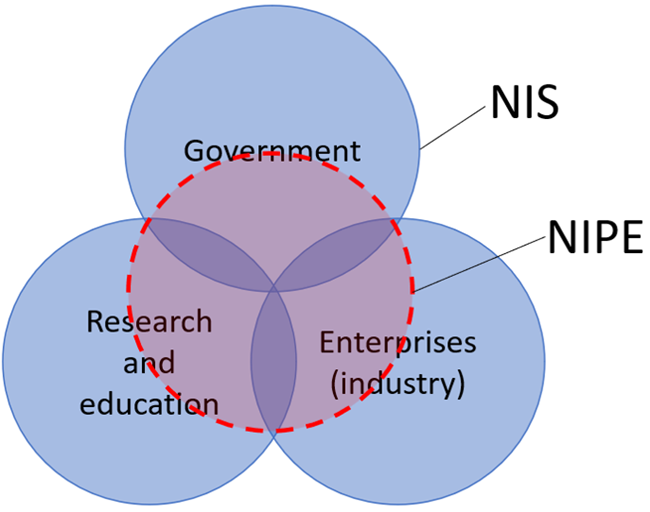
Both systems, NIS and the national IP ecosystem (NIPE), are closely connected. While NIS focuses on the broader environment for fostering innovation, NIPE explicitly governs the protection and commercialisation of intellectual assets. A well-functioning NIS requires a well-balanced NIPE, ensuring that IP rights encourage the dissemination of knowledge and technological progress. In the next chapter, the authors will explain that NIPE can be seen as a subset of NIS, but the opposite view is also possible.
However, this study focuses only on the first understanding of the NIPE – namely, its role within the NIS – and compares two neighbouring countries, Croatia and Slovenia, which share a long historical and institutional legacy. The study examines the availability and functionality of institutions that provide IP-related support, the structure and coherence of national innovation and IP support mechanisms, and the broader IP and innovation performance of both countries. This study specifically focuses on industrial property, not because the authors disregard the importance of copyright, but because industrial property rights are registered and can therefore be clearly identified and measured for comparative analysis. By examining these dimensions, authors aim to identify similarities and differences in how each country integrates IP within its innovation system, and how this integration affects the commercialisation of research and broader innovation outcomes.
National Innovation System and National IP Ecosystem
The term 'IP ecosystem' is not frequently defined in the scientific literature. Reis et al. (2021) very narrowly define it as “a network of relationships between government, business and institutional actors that interact dynamically to provide protection for the intellectual assets generated by entrepreneurs who wish to innovate” (p. 110). They, of course, seek to explain the relationships among entrepreneurship, IP, and innovation ecosystems; thus, their definition prioritises the protection of intellectual assets generated by entrepreneurs. They put a simple formula: entrepreneurship ecosystem + IP ecosystem = innovation ecosystem.
However, the exploitation of intellectual property is not limited to entrepreneurs; it is also essential for artists, scientists, and other key social actors. Such a definition ignores the broader set of actors, institutions, and practices involved in the creation, governance, enforcement, diffusion, and strategic use of IP across different sectors and stages of innovation (or creation). The IP ecosystem could therefore be defined as a network of all participants and processes involved in the creation, protection, and utilisation of intellectual property. This includes creators (artists), inventors, designers, businesses, legal professionals, government agencies, higher educational institutions, and other relevant entities, as well as the rules, measures, technologies, and market mechanisms that govern their interactions.
If the IP ecosystem is defined in this way, what is the relationship between the national innovation system (NIS) and the national IP ecosystem (NIPE)? As noted in the introduction, NIS focuses on the networks of institutions and policies that support the innovation process in a country, with particular emphasis on the roles of government, research institutions, and industry. It is constituted by elements and relationships that interact in the production, dissemination and use of new, and economically advantageous knowledge (Lundvall, 1992). On the conceptual level, NIS appears to be more than the spatial agglomeration of a given activity or cluster but relies on the economic rationale of benefits from agglomeration, specialisation, politics, and complementariness among the elements – it provides a broad approach to assessing a country's economic performance (Acs et al., 2017).
If the focus of research is on NIS, NIPE can be regarded as a subset of NIS (as shown in Figure 1 below), as it provides the legal and institutional framework governing the protection, management, and commercialisation of knowledge and inventions. Intellectual property rights (IPRs) constitute a foundational legal framework that safeguards the creations of the mind, encompassing patents, copyrights, trademarks, and trade secrets which are granting creators exclusive rights to their intellectual endeavours (Kumar, 2024) and therefore promote innovation and market competition (Gupta, 2024), and encourage investment in research and development (Wang, 2025). As such, the NIPE also supports the functioning of NIS by attracting private-sector participation and facilitating technology transfer between public and private actors (Holgersson & Aaboen, 2019; Meissner, 2019).
Figure 1National IP Ecosystem as a Subset of a National Innovation System
Source: authors’ own work.
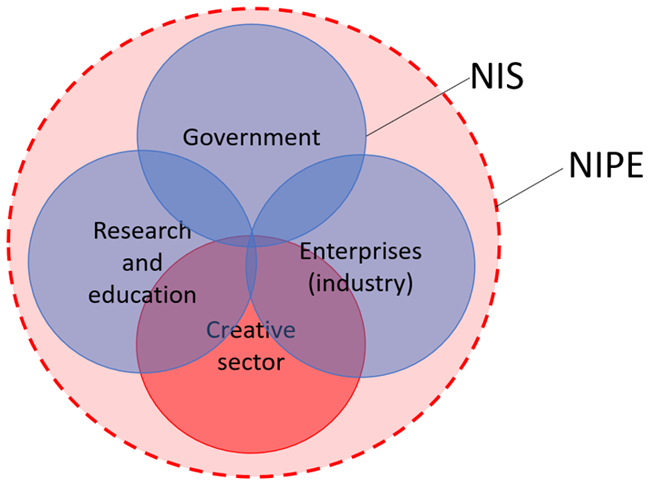
On the other hand, NIPE can be seen as larger than the NIS (see Figure 2 below), since the NIS typically excludes the creative sector (such as writers, artists, musicians, and performers), which also relies heavily on intellectual property protection. While the NIS primarily focuses on technological innovation and the roles of science, industry, and government in fostering economic growth, the NIPE encompasses a broader range of creative outputs beyond science and technology. This includes copyright and related rights that govern the production of cultural and artistic works. As a result, the NIPE spans both the innovation-driven knowledge economy and the broader cultural and creative industries.
Figure 2National IP Ecosystem as Being Wider than the National Innovation System
Source: authors’ own work.
Method
This research employs a cross-country comparative approach, combining analyses of IP data (patents, industrial designs, trademarks) and innovation indexes (Global Innovation Index and European Innovation Scoreboard) with analyses of IP-related institutional support structures. Through comparative institutional analysis, the study explores similarities and differences in the role and availability of IP-related support mechanisms across the two countries. The starting point for the institutional analysis were those institutions which are included in the NIS, e.g. national research agencies and business agencies, knowledge and technology transfer offices, technology parks, incubators, intellectual property offices, development agencies, chambers of commerce, IP attorneys, associations of inventors … Authors tried to get information – mostly on institutional websites – which of these institutions offer services connected to IP such as advisory services, training programs, (financial) incentives for IP registration or support for IP commercialisation.
For the IP data collection, the study relies on international IP databases. Authors used the following IP databases: PATENTSCOPE (n.d.), Search International and National Patent Collections; PATSTAT (n.d.), Global Patent Index (n.d.), Madrid Monitor (n.d.), and eSearch Plus (n.d.).
For retrieving data from IP databases, the authors used the following queries:
For PATENTSCOPE: Applicant address country = HR (or SI) and office = PCT
For Patstat, a SQL query was used:
SELECT distinct tls201_appln.appln_id
FROM tls201_appln
JOIN tls207_pers_appln ON tls201_appln.appln_id = tls207_pers_appln.appln_id
JOIN [tls206_person] on tls207_pers_appln.person_id = tls206_person.person_id
WHERE person_ctry_code = ‘HR’ // or ‘SI’
AND receiving_office = ‘HR’ // or ‘SI’
AND applt_seq_nr > 0
For Global Patent Inex: APPC = HR (or SI) and PUC = HR (or SI) and APD [2000, 2023]
For Madrid Monitor and eSearch plus: Holder country = HR (or SI) AND registration date = [specific year]
Data queries were done from June to August 2025. For designing the charts, MS Excel was used.
Results
A comparison of the two countries' IP systems is presented in Table 1. It reveals a high degree of alignment between Croatia and Slovenia in terms of IP governance. Both countries have centralised national IP offices, DZIV (State Intellectual Property Office) in Croatia and URSIL (Slovenian Intellectual Property Office) in Slovenia, which serve as the primary administrative bodies responsible for managing intellectual property rights. The shared foundation in civil law, derived from the continental European legal tradition, ensures a harmonised legal approach to IP protection. This common basis facilitates regional cooperation, legal predictability, and cross-border IP enforcement. Both countries are parties to the same key international treaties (e.g., WIPO, TRIPS, PCT, EPC, Madrid Protocol), signalling their commitment to global IP standards and ensuring the international recognition and protection of IP rights. This also enables local innovators to access international markets through streamlined mechanisms. The scope of industrial property protection is almost identical, encompassing patents, utility models, industrial designs, trademarks, and geographical indications. This reflects adherence to EU norms and ensures comparable levels of legal coverage for innovators and businesses in both countries. Both countries also provide automatic copyright protection without requiring formal registration, thereby simplifying the protection of creative works.
Table 1IP Systems in Croatia and Slovenia
| Aspect | Croatia | Slovenia |
| National IP office | State Intellectual Property Office of the Republic of Croatia (DZIV) | Slovenian Intellectual Property Office (URSIL) |
| Legal system basis | Civil law (based on continental European legal tradition) | Same |
| International treaties | Member of WIPO, EUIPO, TRIPS, PCT, EPC, Hague Agreement, Madrid Protocol | Same set of memberships |
| Industrial property protection | Patents, utility models, industrial designs, trademarks, geographical indications… | Same |
| Copyright office | No separate copyright registration system (automatic protection) | Same |
Source: authors’ own work.
As noted in the introduction, this research focuses on institutions that support science and industry, including national IP offices, technology transfer offices, innovation agencies, and research and development support organisations. The list of institutions is presented in the Appendix. The list is not exhaustive and may change over time. However, the authors have sought to include the most important entities that play a crucial role in assisting researchers, entrepreneurs, and companies in securing and utilising IP rights effectively. While the creative sector, including musicians, painters, and other artists, also heavily depends on IP, this segment was excluded from this study, as it would require a separate, in-depth analysis. This distinction allows this study to provide a more focused evaluation of how national IP ecosystems function in the context of scientific and industrial innovation (NIS).
However, the tables in the Appendix indicate that most NIS institutions do not offer any IP-related services (or do not provide information about such services on their websites), which makes NIPE significantly smaller than NIS.
The most important institutions that provide IP assistance are the national IP offices (DZIV and URSIL). For IP support, knowledge and technology transfer offices (KTOs) at universities and public research organisations (PROs) are also very important. They are more developed in Slovenia, where more PROs have a KTO. In Croatia, there are only a few of them, but some have very attractive programmes, such as the Fund for IP protection from the University of Split (University of Split, 2024). Slovenia also has four patent information centres (PATLIBs), whereas Croatia has only one (Directory, n.d.). PATLIB centres provide local access to patent information and related issues, are familiar with the local industrial, economic, and business landscape, and offer valuable services to inventors, entrepreneurs, and SMEs (PATLIB, n.d.). Another important source of information for entrepreneurs and inventors is inventors’ associations. While some exist in Croatia, none are currently active in Slovenia.
An important part of NIS in both countries is entities such as business incubators and accelerators, science and technology parks, and regional development agencies and centres. While such institutions are undoubtedly important for business development, according to the authors’ research, there is a lack of evidence that they employ staff with sufficient IP rights knowledge. The same situation is with chambers of commerce and business clubs. Private business consultants typically focus on services such as accounting, tax advisory services, and assistance with EU funding applications. However, they generally lack expertise in IP rights and rarely provide support in this area. However, both countries have several IP attorneys, private consultants, and legal professionals who are officially authorised to represent individuals or organisations in IP matters before their respective national IP offices (DZIV and URSIL). For example, they draft and file patent, trademark, and design applications (Rockman, 2004).
The authors also investigated the number of faculties in Croatia and Slovenia that offer courses on intellectual property. The analysis focused on whether intellectual property is taught as a standalone course or is sufficiently important to be included in the course title. Only higher education institutions that offer such courses were included in the Appendix table. The results show that these courses are primarily offered by law and business schools (economics, management), whereas they are rarely included in faculties of the technical and natural sciences. The authors believe it is important to integrate intellectual property education more systematically into technical and natural science curricula, as students in these fields are directly involved in research, innovation, and knowledge production and therefore require a solid understanding of IP rights and related commercialisation processes.
Slovenia has more public calls (regular tenders) to support IP protection, particularly targeting SMEs and research organisations. Currently active calls are Voucher for patents, designs, trademarks, which is managed by Slovenian Enterprise Fund (Slovenski Podjetniski Sklad, n.d) and Public Call for Supporting the Activities of Knowledge Transfer Offices (JR KTO) co-financed by the Republic of Slovenia, the Ministry of Higher Education, Science and Innovation, and the European Union through the European Regional Development Fund (ERDF) (European Commission, n.d.). For SMEs and PROs, these calls provide co-financing for IP application costs for national or international IP protection. This proactive public support reflects a broader institutional effort to integrate IP into innovation policy and to encourage the commercialisation of research outputs. In contrast, Croatia offers fewer such instruments, which may limit local innovators' ability to effectively protect and leverage their intellectual assets.
This situation is clearly reflected in registered industrial property. Slovenian residents and organisations have more patent applications, industrial designs, and trademarks compared to Croatian residents and organisations. Considering that Croatia has a significantly larger population (Croatia: 3,9 million; Slovenia: 2,1 million in 2024), these differences are even more pronounced.
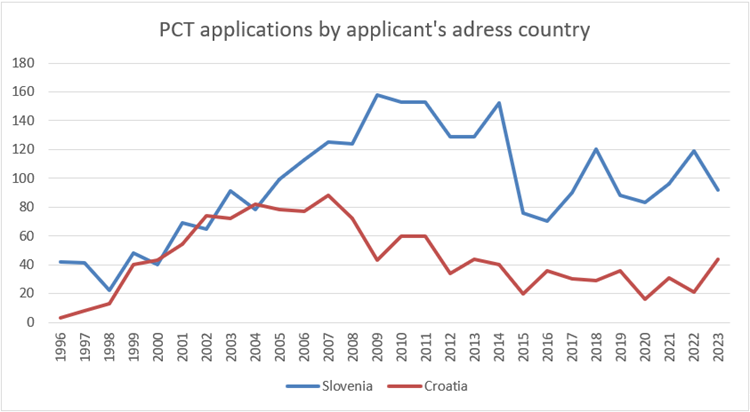
Figure 3 presents PCT patent applications by the applicant’s country of address. Between 1998 and 2004, the number of applications in both countries was approximately the same; thereafter, Slovenia recorded significantly more applications. In recent years, however, the number of applications has declined in both countries, indicating that they have had better times in the past and suggesting that measures are needed to return to that level.
Among the top applicants in Croatia are the pharmaceutical company Pliva, the GlaxoSmithKline Istraživački centar Zagreb, and the Rudjer Bošković Institute; in Slovenia, the pharmaceutical companies Krka and Lek and the University of Ljubljana. This shows the central role of the pharmaceutical industry and key public research institutions in the patenting landscape of both Croatia and Slovenia.
Figure 3PCT Patent Applications by Applicant’s Address Country
Source: database source: PATENTSCOPE, chart: authors’ own work.
A similar pattern is observed in the Patstat database, where PCT applications from national applicants who selected DZIV or URSIL as the receiving office can be identified. The decline in applications is visible in both countries, but it is even more pronounced in Slovenia than in Croatia.
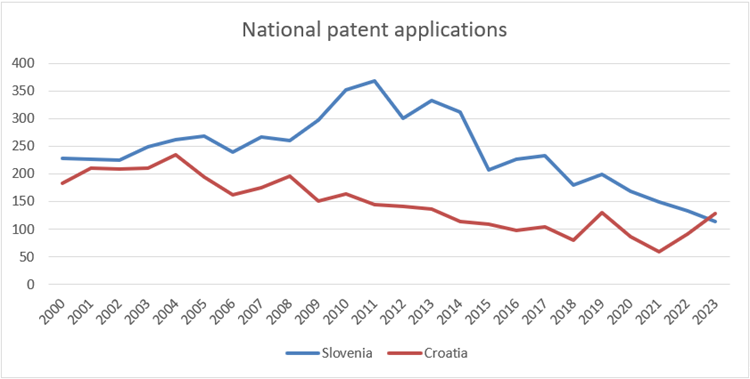
The downward trend is even more pronounced in national patent applications (Figure 4), which refers to applications by Croatian and Slovenian residents filed with the national IP offices (DZIV or URSIL). In both countries, a downward trend is evident, but it is more pronounced in Slovenia. In 2023, Croatia surpassed Slovenia for the first time in the number of national applications.
Figure 4Croatian and Slovenian National Patent Applications
Source: database source: Global Patent Index, chart: authors’ own work.
However, unlike national and PCT applications, European patent applications are increasing slowly in both countries (see Figure 5). This reflects a growing awareness among applicants of the strategic importance of securing protection in the EU market. The increase could be linked to policy initiatives, EU-funded projects, and institutional support programs that encourage companies and research organisations to pursue European-level protection. In Slovenia, such an institutional support programme is the above-mentioned ‘Public Call for Supporting the Activities of Knowledge Transfer Offices (JR KTO)’ (KTS, n.d.).
Figure 5European Patent Applications
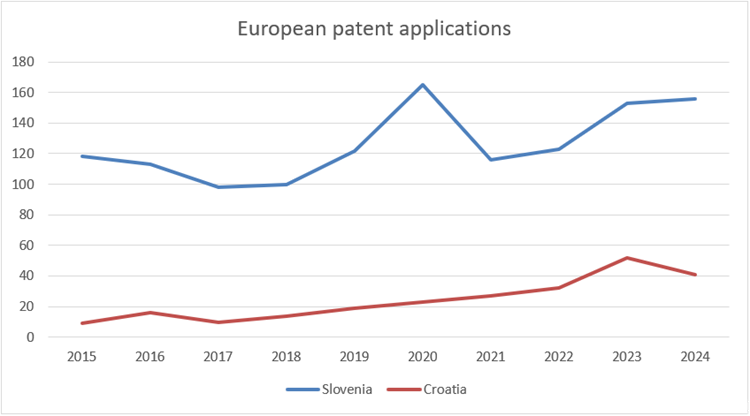
Source: data source: Statistics & Trends Centre, chart: authors’ own work.
Figure 6 below shows the number of trademarks (or service marks) registered through the Madrid System. Slovenian trademark holders hold more registered trademarks, but this trend appears to be stagnating, whereas registrations in Croatia have increased in recent years and are approaching Slovenia's level.
Figure 6Number of Trademarks Registered Through the Madrid System
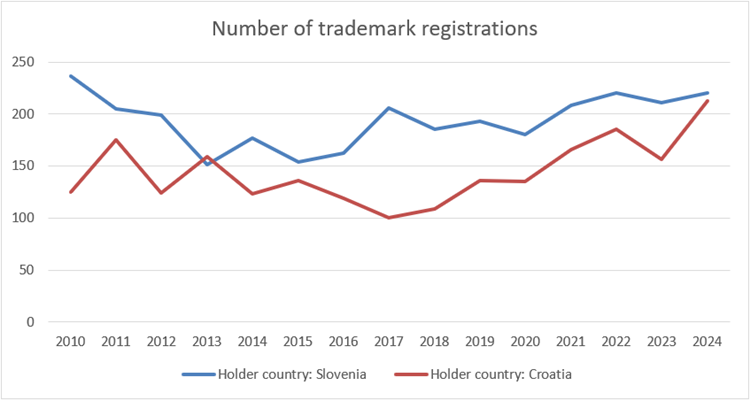
Source: database source: Madrid System, chart: authors’ own work.
Figure 7 below shows the number of industrial designs registered at the EU Intellectual Property Office (EUIPO). Again, Slovenia has more industrial designs, but its trend is stagnating, while the number of registrations in Croatia has been increasing. In 2024, Croatian design holders registered more industrial designs than Slovenian design holders.
Figure 7Number of Industrial Designs Registered at EUIPO
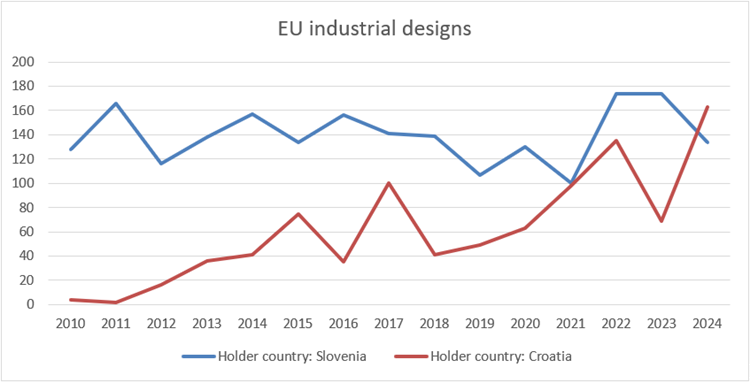
Source: database source: EUIPO eSearch plus, chart: authors’ own work.
Using data from the Global Innovation Index (GII) and the European Innovation Scoreboard (EIS), the authors assess the innovation capacity and IP effectiveness of Croatia and Slovenia. These rankings provide insights into each country’s strengths and weaknesses in fostering a knowledge-driven economy. At EIS, Slovenia is currently ranked 17th, while Croatia is 26th (European Commission, 2025). GII scores for the last few years are presented in the chart below (Figure 8).
Figure 8GII Scores for Croatia and Slovenia
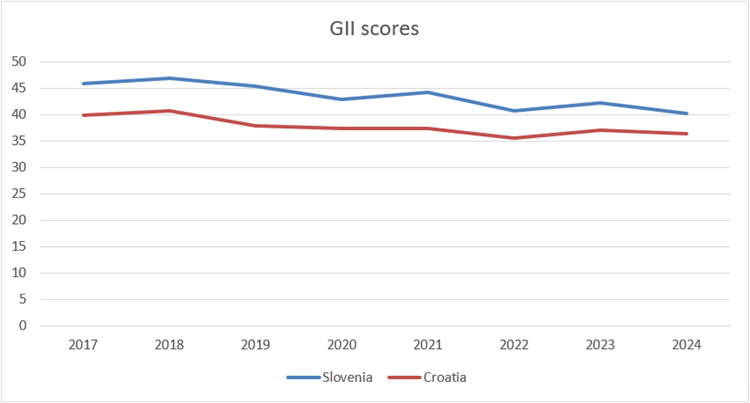
Source: Global Economy. (n.d.). Retrieved August 10, 2025, from
https://www.theglobaleconomy.com/rankings/gii_index/, chart: authors’ own work.
Although Slovenia ranks higher, both countries have experienced declines in their GII rankings since 2018. Several possible reasons include increasing competition from other emerging, innovation-driven economies, such as China.
Discussion
Balzat and Hanusch (2004) identified three development lines of the NIS concept: 1) policy-oriented studies, 2) contributions to formalise the concept of NIS through descriptive or analytical models, and 3) NIS studies of countries beyond the group of highly industrialised economies. This study can also address points 1 and 3. Among European countries, Švarc (2011) identifies three broad groups of countries: “first movers,” such as the Nordic countries, which adopted NIS early; “latecomers,” including countries with highly centralized and relatively inert public administrations – such as France, Italy, and Austria – where the adoption of NIS was slower; and “discursive reformers,” primarily former socialist countries like Slovenia, Hungary, and Poland, where innovation systems were introduced only partially and primarily through broader political and discursive processes, particularly those associated with integration into the European Union. In this third group of countries, according to Švarc (2011), Croatia also belongs.
The dissolution of Yugoslavia in the early 1990s was accompanied by a series of conflicts that had profound and long-term consequences for Slovenia, Croatia, Bosnia and Herzegovina, and Serbia. Among these, Slovenia’s Ten-Day War in 1991 was the briefest and least damaging. This relatively limited exposure to armed conflict may partly explain why Slovenia was more successful than other former Yugoslav countries in establishing a national innovation system. Since gaining independence from Yugoslavia in 1991, Slovenia has made significant achievements in economic and social development (Martin et al., 2015). It joined the European Union in 2004 and the OECD in 2010. Slovenia was recognised as an economic leader among the states of the former Yugoslavia and ranks favourably among its EU colleagues in many measures of economic performance and innovation (Martin et al., 2015). Croatia became an EU member in 2013, nearly ten years after Slovenia.
A comparative analysis of Croatia and Slovenia presented in this article still reveals differences in the structure and performance of their national IP ecosystems. Although both countries share a similar legal framework and international IP commitments, their IP performance and institutional arrangements diverge in some respects.
Slovenia leads in the number of registered IP rights; however, it has experienced a notable decline in PCT and national patent applications over the last ten years, which has been steeper than that observed in Croatia. In addition, Croatia has shown a positive trend in trademark and industrial design registrations, whereas Slovenia's performance in these categories has mainly remained stagnant. This suggests that while Slovenia may have initially benefited from a more mature innovation environment, its momentum has weakened, potentially indicating a need for renewed strategic focus on fostering innovation protected with industrial property. This situation reflects several years of neglect in the field, which the current government is attempting to address through initiatives such as the adoption of a national IP strategy (GOV.SI, 2024; Urad Republike Slovenije, 2024). This strategy does not address industrial property (or NIS) alone; it also emphasises the importance of open science and encompasses copyrights (including open-source software) and the creative sector more broadly, aiming to strengthen the entire intellectual property ecosystem. While the measures are appropriate, their effects will only become visible in the coming years.
When examining support structures, Croatia has more institutions within its NIS. However, a greater proportion of Slovenian institutions provide IP-specific support services, which could enhance the quality and coherence of assistance available to innovators, inventors and entrepreneurs. This structural efficiency may explain Slovenia’s historical strength in IP metrics despite its smaller innovation ecosystem.
However, Croatia has some other positive sides: its innovation landscape is characterised by the presence of inventors’ associations – an element completely absent in Slovenia. These associations can play a critical role in grassroots innovation, peer learning, and policy advocacy. Additionally, Croatia has implemented a more advanced e-filing system for patents, which streamlines the application process and may reduce administrative barriers for inventors seeking protection (State Intellectual Property Office, n.d.).
Despite Croatia’s broader institutional base and technical improvements, Slovenia appears to benefit from stronger state support mechanisms. Public funding measures that consistently support public research organisations and SMEs may help to explain Slovenia’s comparatively better IP performance. This suggests that Croatian policy could benefit from introducing more stable, long-term funding instruments to strengthen the capacity of research organisations and SMEs to generate and protect intellectual property. Among these, support for KTOs is critical, as the success of commercialisation models at European universities is primarily shaped by the availability of funding sources and the activity and capacity of technology transfer offices (Skala-Gosk, 2025). In particular, targeted programs that combine financial incentives with advisory services, training, and technology transfer support may be effective in enhancing Croatia’s innovation and IP outcomes. Here, it is not necessary to take another state, such as Germany, France or Slovenia, as the ultimate role model. As research on EU Member States has shown, highly innovative states are those with their own policy designs to stimulate support for innovation by providing a predictable, stable, and transparent democratic and legal environment (Kustec & Zalokar, 2024).
Conclusion
By identifying gaps and challenges within each ecosystem, this study highlights opportunities for mutual learning, where Croatia and Slovenia can adopt best practices from one another to enhance their IP strategies. While Slovenia has historically outperformed Croatia in several IP and innovation indicators, the decline or stagnation in industrial property applications over the last ten years suggests emerging vulnerabilities. Current Slovenian policymakers are aware of this situation and have already taken important steps, such as the recent adoption of a national IP strategy (Urad Republike Slovenije, 2024).
Croatia, on the other hand, is showing signs of gradual institutional strengthening and engagement with digital tools, which may position it more favourably in the future – if more targeted and consistent policy efforts support these trends. Croatia should introduce stable, long-term funding instruments that strengthen research organisations (KTOs) and SMEs, thereby creating a predictable and supportive environment for generating and commercialising intellectual property.
A key limitation of this study is its reliance on website-based data to identify and analyse NIS institutions. While institutional websites provide accessible and comparable information, they may not fully capture the scope, quality, or effectiveness of IP-related support activities, as some practices are not systematically documented or regularly updated online. However, findings of this study still provide valuable insights for policymakers, industry leaders, and academia, offering recommendations to strengthen national intellectual property frameworks and enhance the global competitiveness of both countries. This research aligns with the broader discourse on sustainable innovation and digital transformation, emphasising the role of resilient IP systems in fostering long-term economic and technological advancement.
Acknowledgement
Authors would like to thank Public Agency for Scientific Research and Innovation of the Republic of Slovenia (ARIS) and Ministry of Higher Education, Science and Innovation (MVZI) for support of the “CRP – Podpora IL” project (Analysis of the supportive environment for effective management and exploitation of intellectual property in Slovenia); website: https://www.rudolfovo.eu/en/nacionalni-projekti/crp-il%3A-. The authors are grateful to Dr Urška Florjančič and Dr Terezija Poženel Kovačič from the Jožef Stefan Institute, who helped to collect data on Slovenian support institutions.
Funding sources
Public Agency for Scientific Research and Innovation of the Republic of Slovenia (ARIS) and Ministry of Higher Education, Science and Innovation (MVZI) through “CRP – Podpora IL” project (Analysis of the supportive environment for effective management and exploitation of intellectual property in Slovenia).

References
- Acs, Z. J., Audretsch, D. B., Lehmann, E. E., & Licht, G. (2017). National systems of innovation. The Journal of Technology Transfer, 42, 997-1008. https://doi.org/10.1007/s10961-016-9481-8
- Balzat, M., & Hanusch, H. (2004). Recent trends in the research on national innovation systems. Journal of Evolutionary Economics, 14(2), 197–210. https://doi.org/10.1007/s00191-004-0187-y
- Directory. (n.d.). Retrieved July 10, 2025, from https://epn.epo.org/patlib/directory
- eSearh plus. (n.d.). Retrieved July 10, 2025, from https://euipo.europa.eu/eSearch/#advanced/designs
- European Commission. (n.d.). European Regional Development Fund (ERDF). Retrieved August 25, 2025, from https://commission.europa.eu/funding-tenders/find-funding/eu-funding-programmes/european-regional-development-fund-erdf_en
- European Commission. (2025). European innovation scoreboard. https://research-and-innovation.ec.europa.eu/statistics/performance-indicators/european-innovation-scoreboard_en
- Global Economy. (n.d.). Retrieved August 10, 2025, from https://www.theglobaleconomy.com/rankings/gii_index/
- Global Patent Index. (n.d.). Retrieved September 1, 2025, from https://www.epo.org/en/searching-for-patents/technical/espacenet/gpi
- GOV.SI. (2024, June 19). Slovenija s krovnim strateškim dokumentom na področju intelektualne lastnine [Slovenia with an umbrella strategic document in the field of intellectual property]. https://www.gov.si/novice/2024-06-19-slovenija-s-krovnim-strateskim-dokumentom-na-podrocju-intelektualne-lastnine/
- Gupta, A. (2024). The economics of intellectual property rights: Balancing innovation and market competition. LawFoyer International Journal of Doctrinal Legal Research, 2, 141.
- Holgersson, M., & Aaboen, L. (2019). A literature review of intellectual property management in technology transfer offices: From appropriation to utilization. Technology in Society, 59, 101132. https://doi.org/10.1016/j.techsoc.2019.04.008
- Kumar, D. P. (2024). Intellectual Property Rights (IPR): Nurturing creativity, fostering innovation. Idealistic Journal of Advanced Research in Progressive Spectrums (IJARPS), 3(02), 32-38. https://journal.ijarps.org/index.php/IJARPS/article/view/321
- KTS. (n.d.). Slovenian Science in One Place. Retrieved 26 September 2025, from https://prenosznanja.si/en/
- Kustec, S., & Zalokar, A. (2024). Innovation as a public interest of a democratic state: A comparative statistical analysis of the EU member states. Journal of Comparative Politics, 17(2), 88–105. https://www.jofcp.org/assets/jcp/Articles-2024/JCP-July24-6.pdf
- Lundvall, B.-Å. (1992). National systems of innovation: towards a theory of innovation and interactive learning. Pinter.
- Lundvall, B.-Å. (2016). The learning economy and the economics of hope. Anthem Press. https://doi.org/10.26530/oapen_626406
- Madrid Monitor. (n.d.). Retrieved July 10, 2025, from https://www3.wipo.int/madrid/monitor/en/
- Martin, S., Pahor, M., & Jaklič, M. (2015). The structure of policy-induced innovation networks in Slovenia. European Journal of Innovation Management, 18(4), 428-450. https://doi.org/10.1108/EJIM-09-2013-0093
- Meissner, D. (2019). Public-private partnership models for science, technology, and innovation cooperation. Journal of the Knowledge Economy, 10(4), 1341–1361. https://doi.org/10.1007/s13132-015-0310-3
- Nelson, R. R. (Ed.). (1993). National Innovation Systems: A comparative analysis. Oxford University Press.
- Nguyen, A. T. D. (2024). Is the TRIPS Agreement a double-edge sword? The VMOST Journal of Social Sciences and Humanities, 66(2), 114-120. https://doi.org/10.31276/VMOSTJOSSH.2023.0094
- PATENTSCOPE. (n.d.). Retrieved July 10, 2025, from https://patentscope.wipo.int/search/en/search.jsf
- PATLIB. (n.d.). Retrieved July 10, 2025, from https://www.epo.org/en/searching-for-patents/helpful-resources/patlib
- PATSTAT. (n.d.). Retrieved July 10, 2025, from https://www.epo.org/en/searching-for-patents/business/patstat
- Reis, D., Moura, F., & Aragão, I. (2021). Entrepreneurship, intellectual property and innovation ecosystems. International Journal for Innovation Education and Research, 9(2), 108-134.
- Rockman, H. B. (2004). Intellectual property law for engineers and scientists. John Wiley & Sons.
- Shabani, F. (2024). Harmonization of the legal regulations for the intellectual property of the Republic of North Macedonia with the European Union acquis. International Journal of Legal Sciences-JUSTICIA, 12(21–22), 328–336. https://doi.org/10.62792/ut.jus.v12.i21-22.p2786
- Skala-Gosk, A. (2025). The Surrogate Student Entrepreneurship Model–Can the Swedish commercialisation model work in Poland? e-mentor, 2(109), 13-21. https://www.e-mentor.edu.pl/artykul/index/numer/109/id/1706
- Slovenski Podjetniski Sklad. (n.d.). V2. Vavčer za patente, modele, znamke [V2. Voucher for patents, designs, trademarks]. Retrieved December 15, 2025, from https://www.podjetniskisklad.si/v2-vavcer-za-patente-modele-znamke/
- State Intellectual Property Office. (n.d.). E-filing for industrial property. Retrieved September, 1, 2025, from https://www.dziv.hr/en/e-services/e-filing/
- Statistics & Trends Centre. (n.d.). Retrieved July 10, 2025, from https://www.epo.org/en/about-us/statistics/statistics-centre#/customchart
- Švarc, J. (2011). Does Croatian national innovation system (NIS) follow the path towards knowledge economy? International Journal of Technology Transfer and Commercialisation, 10(10), 131-151.
- University of Split. (2024, February 7). Applications are open for allocating grants from the Fund for Protection of Intellectual Property. https://www.unist.hr/applications-are-open-for-allocating-grants-from-the-fund-for-protection-of-intellectual-property/18085
- Urad Republike Slovenije. (2024). Nacionalna strategija intelektualne lastnine do leta 2030 [National Intellectual Property Strategy 2030]. https://www.gov.si/assets/organi-v-sestavi/URSIL/Dokumenti/NACIONALNA-STRATEGIJA_IL_SI_ebook.pdf
- Wang, S. (2025). Strengthening intellectual property rights for sustainable development: Insights Into economic performance and technological advancement. Information Development, 02666669251349154. https://doi.org/10.1177/02666669251349154
- Weerasinghe, R. N., Jayawardane, A. K. W., & Huang, Q. (2024). Critical inquiry on National Innovation System: Does NIS fit with developing countries? Sustainable Technology and Entrepreneurship, 3(1), 100052. https://doi.org/10.1016/j.stae.2023.100052
 https://orcid.org/0000-0003-2695-7022